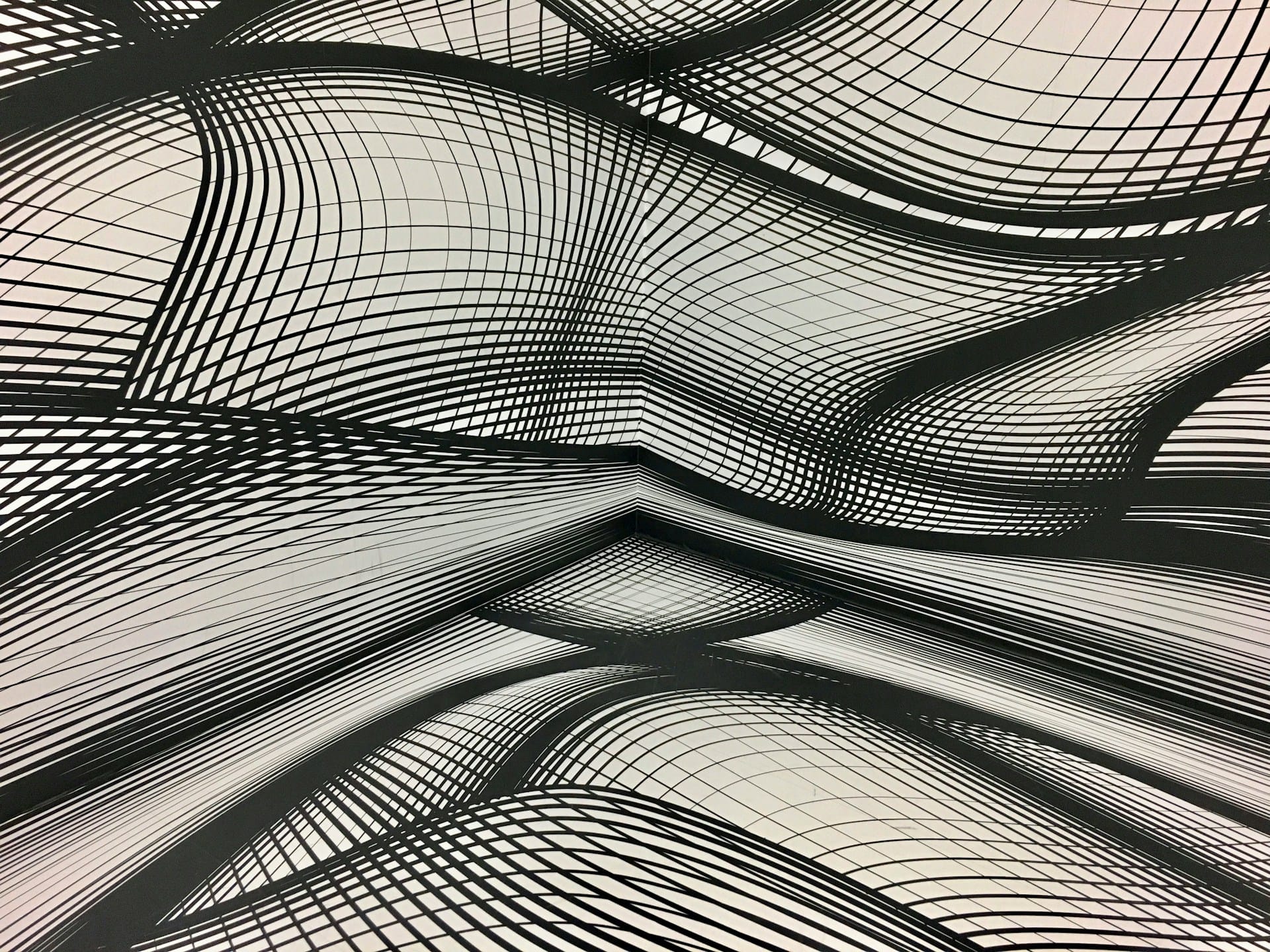

Systems art is art built from explicit rules, processes or feedback loops instead of the artist’s intuition, shaped by cybernetics and systems theory. The critic Jack Burnham defined it in his essay “Systems Esthetics” (Artforum, September 1968). Hans Haacke’s self-regulating works, Roy Ascott’s cybernetic art teaching and Jasia Reichardt’s exhibition Cybernetic Serendipity (ICA London, August to October 1968) made it visible, and Sol LeWitt, Mel Bochner and Charles Gaines carried the method into conceptual art.
The movement emerged in the late 1960s, when artists replaced intuition with explicit rules and then followed them. By making the system the visible subject of the work, artists from Hans Haacke to Mel Bochner to Charles Gaines produced art that is procedurally rigorous, analytically honest, and deliberately impersonal.
What Systems Art Was Arguing — and Why It Needed to Exist in 1968
Abstract Expressionism made the artist’s inner life the subject. You were supposed to feel the gesture, the accident, the personal risk. Minimalism cleared the canvas but then stood there admiring its own austerity. Systems art had a problem with both. It wanted to expose the hidden structures art was built on, not celebrate the hand that made it.
Jack Burnham named the approach in “Systems Esthetics,” published in Artforum in September 1968. Luke Skrebowski, writing in Tate Papers, called it “the first fully fledged analysis of what he dubbed ‘post-formalist’ art.” Burnham drew directly on Ludwig von Bertalanffy’s General Systems Theory and Norbert Wiener’s cybernetics. His argument was not that art should look like a flowchart. It was that culture was moving from object-based to systems-based production, and art had better figure out what that meant. Burnham was an inaugural fellow at MIT’s Center for Advanced Visual Studies beginning in 1968, working alongside systems engineer Gustave Rath, which is where this intellectual cross-pollination was most concentrated.
Two years earlier, Lawrence Alloway had used the term “Systematic art” in 1966 to describe Kenneth Noland, Al Held, and Frank Stella’s compositional methods. Burnham’s framing was broader and more politically charged: systems thinking applied to social and institutional structures, not just pictorial ones. The difference matters. Alloway was describing how certain painters organized their canvases. Burnham was describing how power organizes itself. Architecture reached the same conclusion a generation later, when Stan Allen’s field conditions asked designers to treat buildings as samples of larger organizational systems rather than composed objects.
Britain got there by a different road. Roy Ascott, born in Bath in 1934, had been applying cybernetics to art and to art teaching since the early 1960s, most famously in the Groundcourse he ran at Ealing Art College, and set out the argument in “Behaviourist Art and the Cybernetic Vision,” published in the journal Cybernetica. The same summer Burnham’s essay went to press, Jasia Reichardt opened Cybernetic Serendipity at the Institute of Contemporary Arts in London (2 August to 20 October 1968), a survey of computer graphics, music, robots and responsive machines that toured to Washington and San Francisco the following year.
The same distrust of ornament that runs through modernist design’s functionalist tradition runs through systems art. Where Rams wanted restraint in the service of clarity, the systems artists wanted transparency in the service of exposure. The system would show its work because the work of showing was the point.
How a rule becomes a work: the analytical logic of systems art explained
The systems artist’s decision is not what to make but what procedure to follow. This is a transfer of authorship: from the artist’s intuition to the system’s output. The artist designs constraints, not outcomes. That sounds like abdication. It is the opposite.
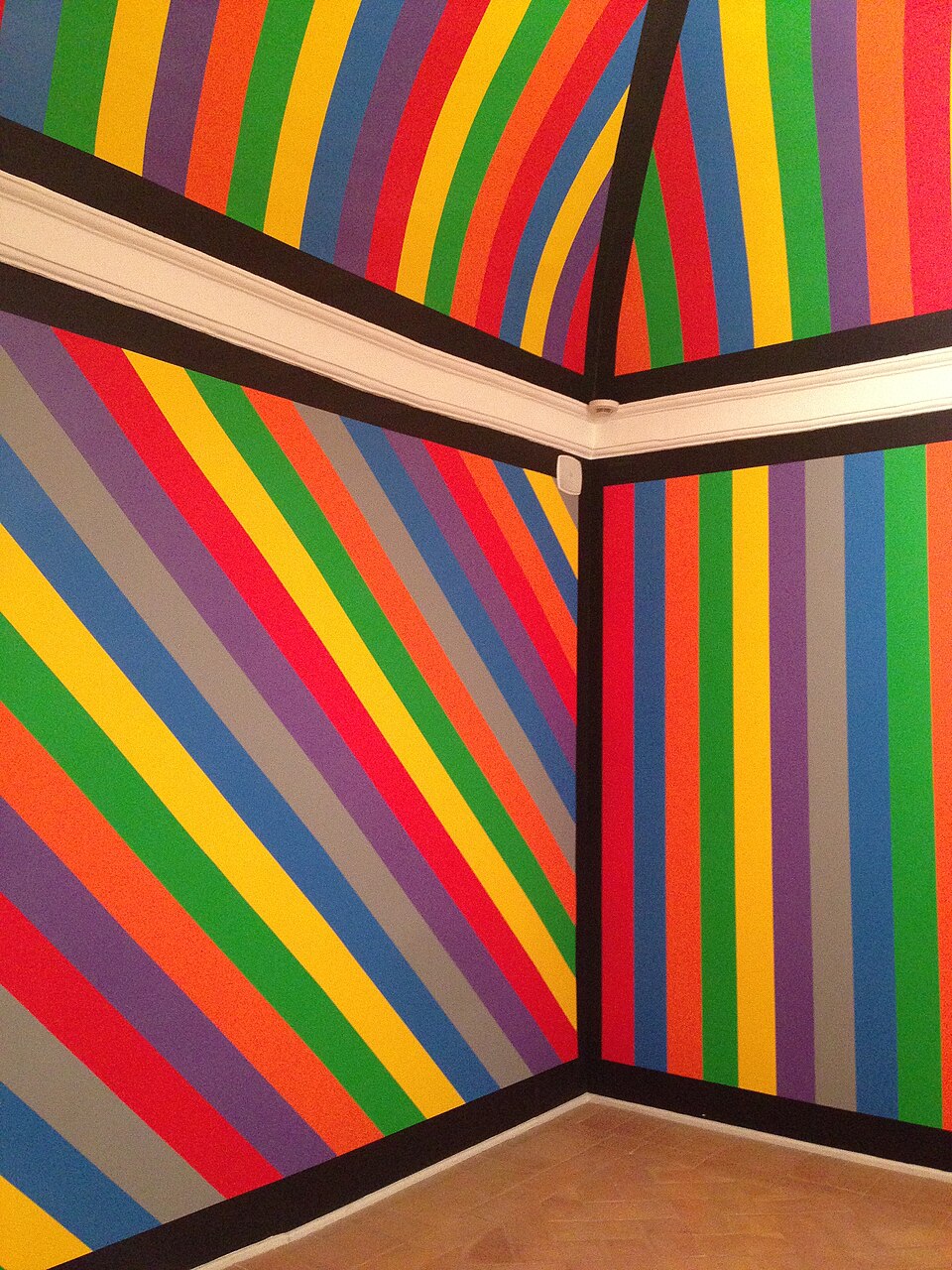
Consider what Sol LeWitt wrote in “Paragraphs on Conceptual Art” (Artforum, 1967): “To work with a plan that is preset is one way of avoiding subjectivity. It also obviates the necessity for designing each work in turn. The plan would design the work.” The artist is the designer of the procedure. The procedure is the artwork. What you see on the wall is evidence, not product.
This makes the work self-disclosing in a way that distinguishes systems art from Minimalism, which shares its austerity but not its transparency. A Donald Judd stack does not tell you its rules. A LeWitt wall drawing does: the instructions are either posted on the wall or available in the certificate. A viewer who understands the system can reconstruct the whole from any part.
Mel Bochner theorized this before his studio practice had fully caught up with his thinking. His essays “Art in Process — Structures” (Arts Magazine, 1966), “Serial Art Systems: Solipsism” (Arts Magazine, 1967), and “The Serial Attitude” (Artforum, 1967) worked out the conceptual scaffolding. Then, in May 1969 at the Heiner Friedrich Gallery in Munich, he installed Measurement: Room: black tape applied directly to gallery walls, with measurements of window widths, door heights, and wall lengths notated in numbers. Bochner described it as an attempt to “expose the hidden regime of architecture, to make it reveal itself” (Dia Art Foundation).
The political charge arrives when the system turns from physical to social. The canonical modernist objects (the furniture that mid-century modernism treated as its highest achievements) operated on a logic of constraints too, but never announced it. Their rules were about proportion, material, structure. Systems art said: what happens if you apply that same rigorous proceduralism to social and institutional structures? Hans Haacke, starting from biological systems and moving to sociological ones by 1971, answered that question in a way the Guggenheim was not prepared for.
The question of whether design is art runs through the same decades as systems art, but toward a different end. Alessi deliberately blurred the line by commissioning architects and artists to make domestic objects. The production constraints were real, and the authorship was consciously imported from fine art. Systems art went the other direction: it made fine art as procedurally rigorous as engineering, and refused to apologize for the impersonality that followed.
Five works that show how systems art works (and why it matters)
The five works below are not a survey. They are a demonstration. Each one makes the logic visible in a different medium and at a different political temperature.
Hans Haacke, Condensation Cube (1963–65)
A sealed acrylic cube containing water, which condenses and evaporates in response to viewers’ body heat and ambient temperature. The work has no fixed appearance. It is a closed system registering its environment in real time. Haacke called it a redefinition of the work of art as “a living system.” The Tate holds a version dated 1963–65; MACBA Barcelona holds a version dated 1963–67. The dating discrepancy is itself instructive: the work is a system that can be reinstantiated, not a singular object with a single provenance date.
Hans Haacke, Grass Grows (1969)
A pile of soil seeded with grass, installed in the gallery. The grass germinates and grows over the course of the exhibition, transforming a mound of dirt into a small green mountain. The artwork’s form at any moment is determined by biological process, not compositional decision. Haacke had been working this vein since his 1967 MIT Hayden Gallery solo exhibition, where his explicit ambition was works in which components “physically communicate with each other, and the whole communicate physically with the environment” (MIT List Visual Arts Center).
Two years after Grass Grows, Haacke applied the same logic to social systems. Shapolsky et al. Manhattan Real Estate Holdings, a Real-Time Social System, as of May 1, 1971 mapped a network of connected real estate holdings in New York’s Lower East Side and Harlem through photographs and data. The Guggenheim, which had offered Haacke a solo exhibition in 1971, cancelled the whole show six weeks before it opened rather than hang the work. The institutional systems the work described turned out to be adjacent to the institutional systems the museum was embedded in. The biological systems had been tolerable. The social ones were not.
Mel Bochner, Measurement: Room (1969)
Black tape on gallery walls at the Heiner Friedrich Gallery, Munich, with measurements of the architectural space written directly onto the walls in numbers. Bochner (1940–2025) described the work as exposing the “hidden regime of architecture”: the quantitative grid that organizes every display space, ordinarily invisible, now literal and inescapable. The work is available for study through the Dia Art Foundation, which holds documentation.
Sol LeWitt, Wall Drawing #1 (1968)
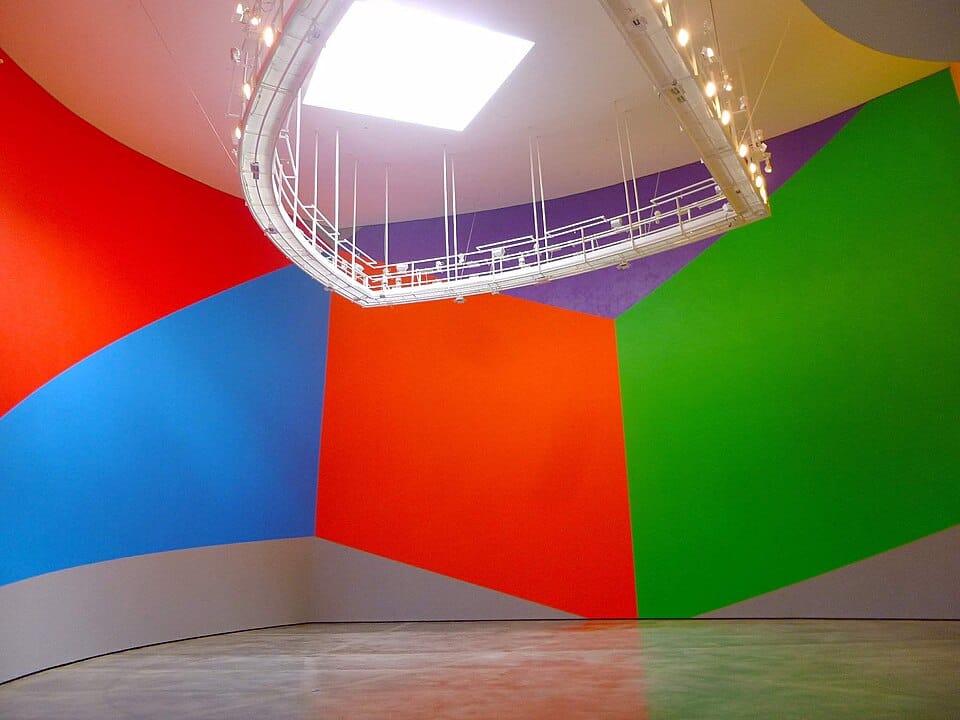
Instructions rather than a fixed object: pencil lines drawn on a wall by assistants following LeWitt’s written directions. The score, not the execution, is the work. LeWitt (1928–2007) created approximately 1,350 wall drawings over his career, installed at more than 1,200 venues (National Gallery of Art). The same drawing can be installed in Tokyo and New York simultaneously. The work is not diminished by multiplication because the work was never the physical marks.
This is the sharpest distinction from painting. A Rothko is where it is. A LeWitt is its instructions, which can be anywhere.
Charles Gaines, Walnut Tree Orchard (1975–2014)
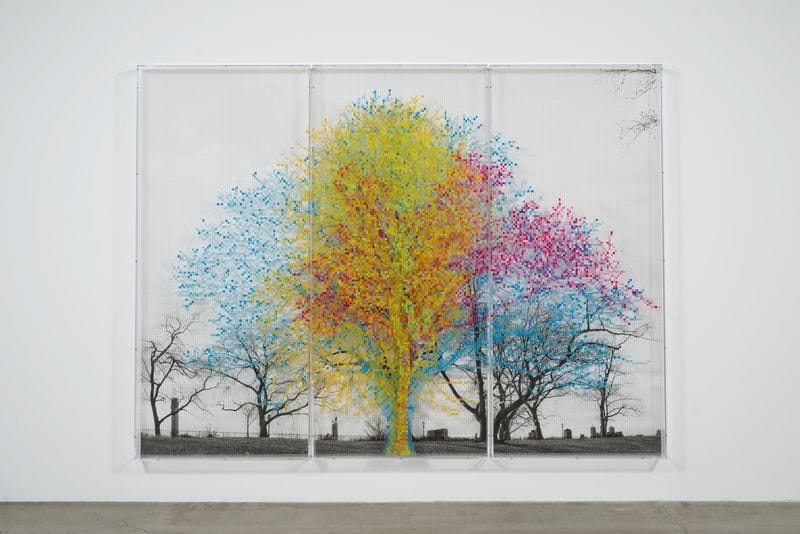
A numerical system converts photographs of 26 walnut trees into silhouette drawings, shown individually and in layered accumulation. The rules of translation are explicit. The final image is the output of the system, not of the artist’s hand. As Art21 documents in its profile of Gaines, his works “reveal the process of their own creation, making visible the ‘rules’ that dictate their final forms.”
Gaines (born 1944) was one of the only African American conceptual artists working in this vein in the 1970s. His CalArts colleagues and peers were under constant pressure toward explicitly political expressionism, with the expectation that Black artists should be making work legible as protest. Gaines pursued abstraction instead. That refusal is itself a systems-level argument about what abstraction is allowed to mean, and who gets to work inside it. His later Manifestos series, which translates revolutionary speeches (including Malcolm X’s last public address in 1965) into musical scores, makes the same point from the other direction: systems as a form of analysis, not as a retreat from politics.
Shop the collection
Systems art has a literature that is worth owning, not just reading about. These three selections get you as close to the primary argument as you can get outside of a gallery.
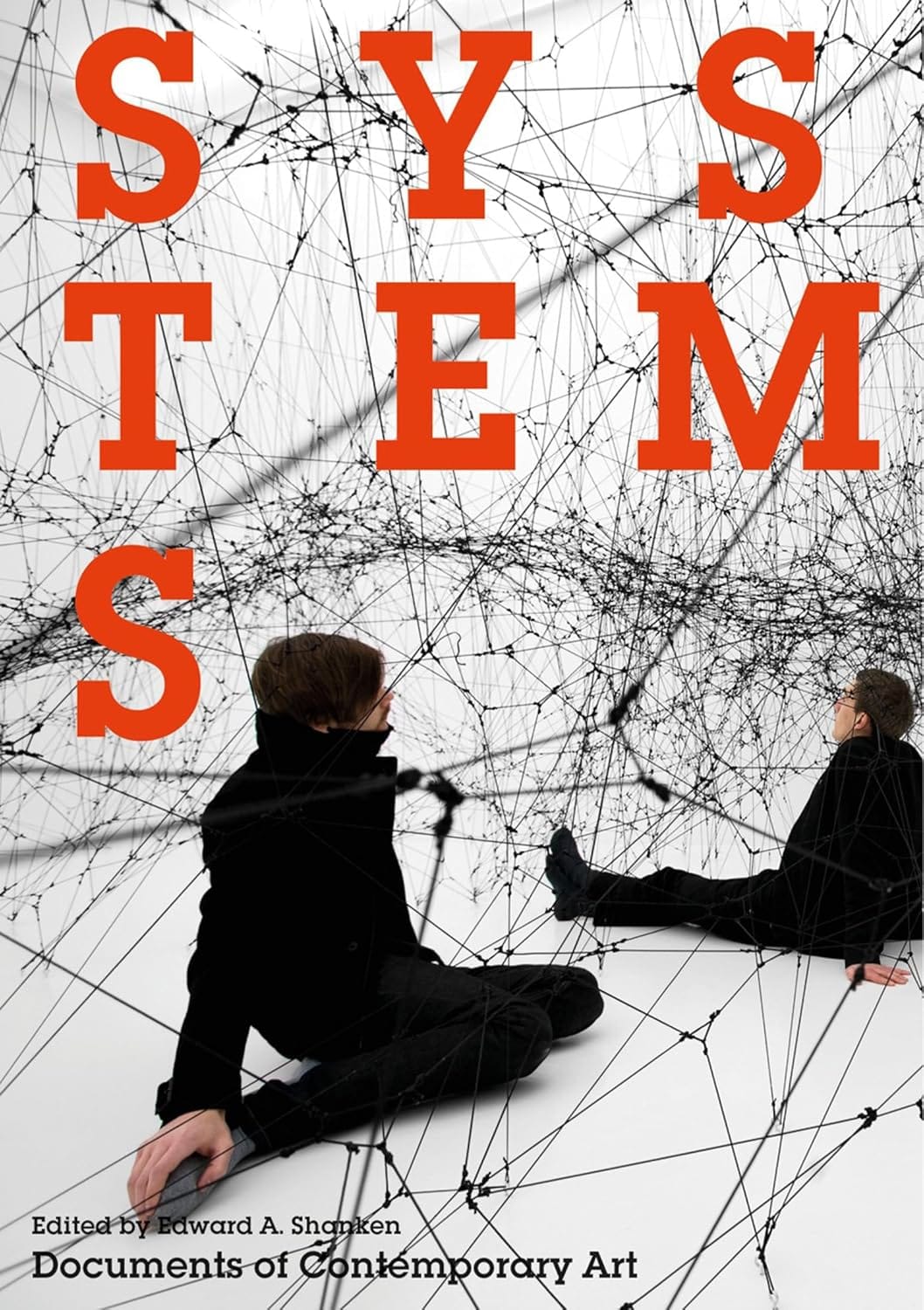
Systems, ed. Edward A. Shanken (Whitechapel / MIT Press, 2015): The primary anthology, collecting over 80 texts from Haacke, LeWitt, Burnham, and others spanning the 1950s origins through the 21st-century resurgence. This is the reader that lets you hear what “systems” meant to the artists who used the term, in their own words, not through retrospective summary.
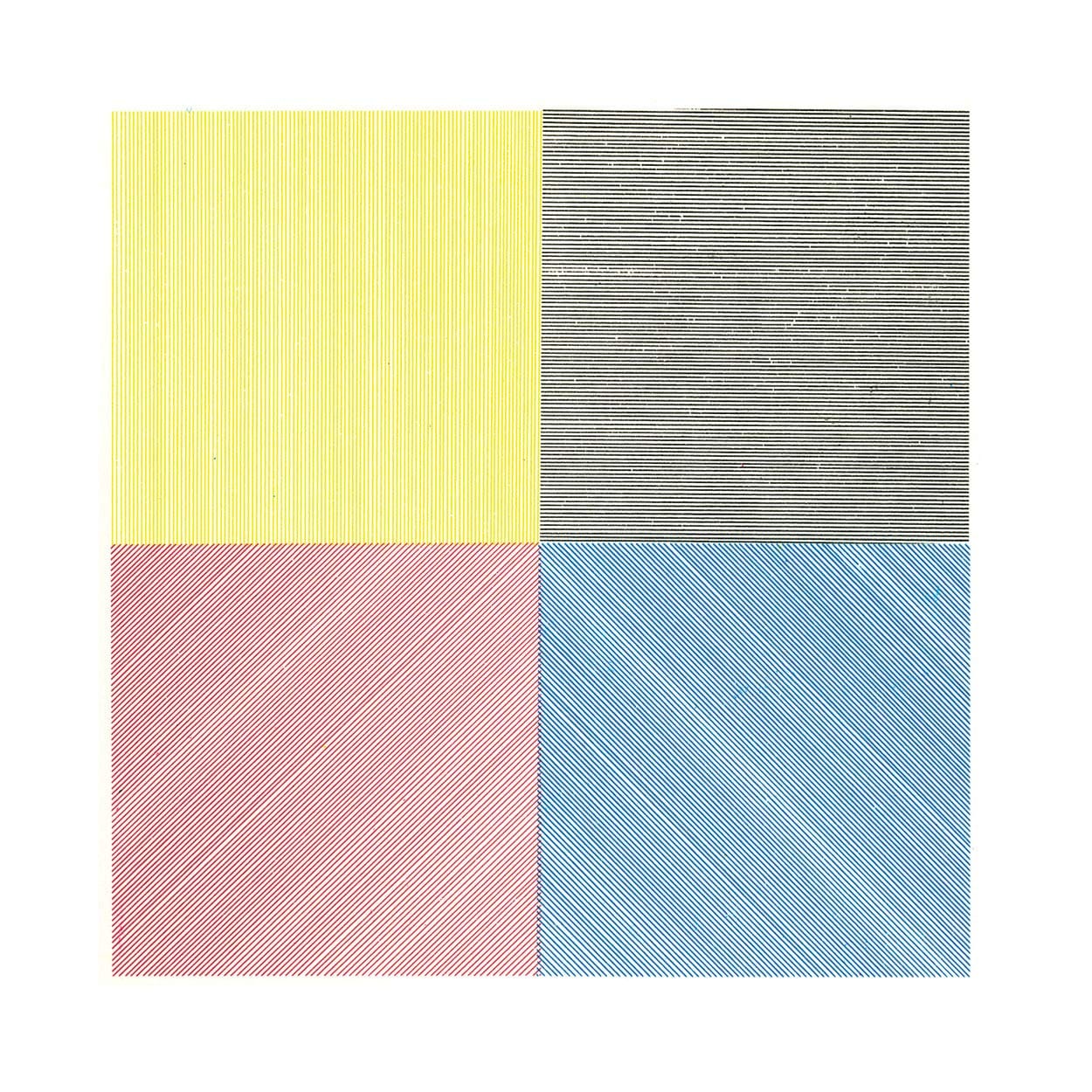
Sol LeWitt Wall Drawing Print: LeWitt’s wall drawings are the clearest visual demonstration of systems logic for a reader encountering the movement for the first time. A print brings that formal argument into a domestic space without requiring a museum visit. Unlike most art reproductions, it does not betray the original, because the original was always already a set of instructions.
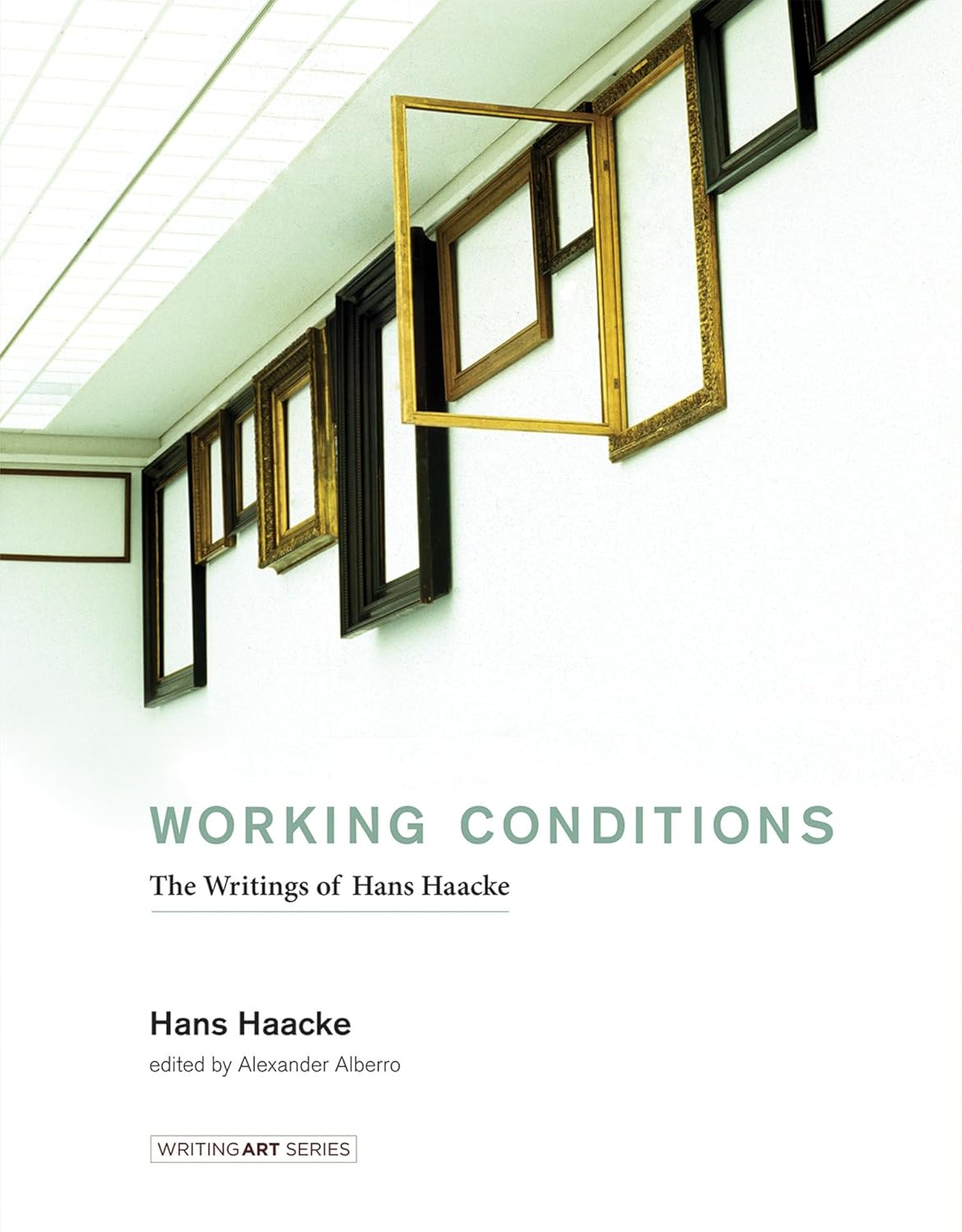
Hans Haacke Exhibition Catalogue or Monograph: Haacke’s catalogue documentation is the only way to encounter his social-systems works outside institutional archives. The exhibition record is the primary text for his post-1971 practice. The documentation is what the work becomes once the gallery has refused it.
Further reading
Two books are worth owning on this subject. They cover different ground and neither substitutes for the other.
Edward A. Shanken, ed., Systems (Whitechapel / MIT Press, 2015): The definitive primary source anthology. If you read one book on this movement, it is this one. Shanken has compiled the texts the artists and critics wrote at the time, so you hear the argument in its original register: Burnham explaining cybernetics to an art audience, LeWitt explaining why the idea was the work, Haacke explaining why biology and sociology are the same kind of system. You need the primary sources to understand what the retrospective accounts are arguing about. For the neighboring shelf, LeWitt and Kosuth’s side of the argument, see the ranked guide to the best books on conceptual art.
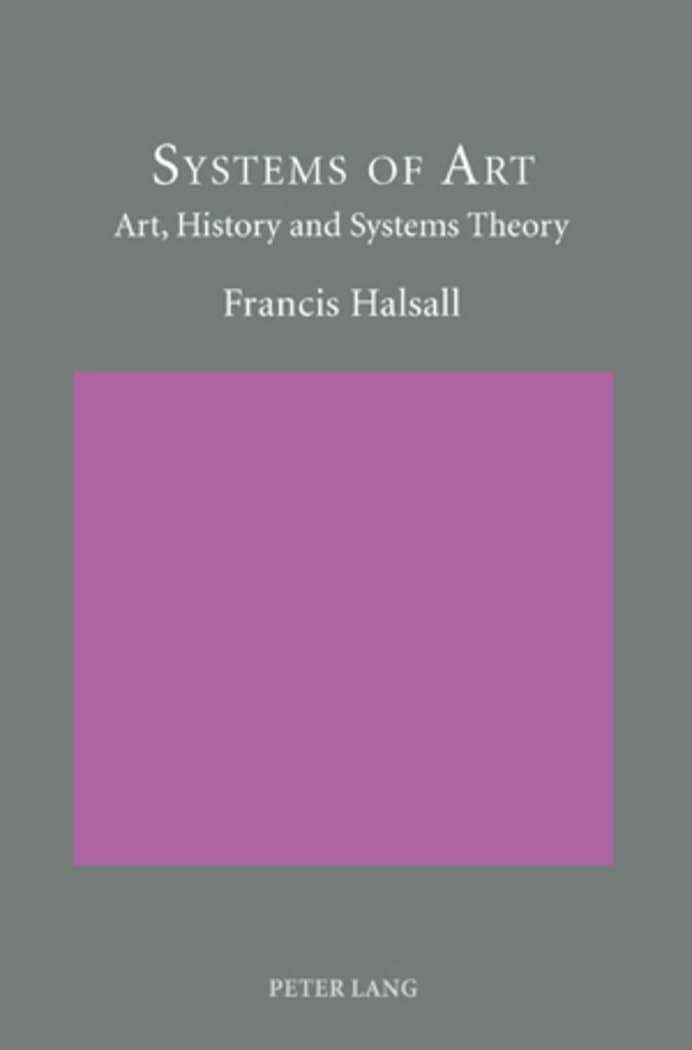
Francis Halsall, Systems of Art: Art, History and Systems Theory (Peter Lang, 2008): Halsall applies contemporary systems theory rigorously to art history. It is the book that explains why the artists’ use of “system” was philosophically serious, not metaphorical, and why it remains productive as an analytical frame. The artists were not borrowing a fashionable word from science. They were working through a genuine epistemological shift, and Halsall traces that shift with precision.
Frequently asked questions
What is systems art in simple terms?
Systems art is art made by following explicit rules rather than improvising. The artist defines a procedure (a system) and then executes it, or designates others to execute it. The work is what the system produces. The rules are usually either stated in the title, posted alongside the work, or visible in the work’s structure. The point is transparency: unlike most art, a systems artwork tells you how it was made.
Who are the most important systems artists?
Hans Haacke, Sol LeWitt, Mel Bochner, and Charles Gaines are the four figures whose work most clearly defined the movement. Jack Burnham was the movement’s primary theorist rather than practitioner. Beyond this American center, a British Systems Group formed after the 1969 Helsinki exhibition Systeemi/System, working in a constructivist tradition. Sonia Landy Sheridan founded the Generative Systems program at the School of the Art Institute of Chicago in 1969, extending systems logic into photocopy technology and early digital media.
How is systems art different from conceptual art?
Conceptual art is the broader category; systems art is a specific method within it. Conceptual art’s central claim, as Sol LeWitt stated in “Paragraphs on Conceptual Art” (Artforum, 1967), is that the idea is the most important aspect of the work. Systems art accepts that premise but adds a constraint: the idea must be a procedure, and the procedure must be followed completely and transparently. Not all conceptual art is procedural. All systems art is.
Why did systems art emerge in the 1960s?
Three pressures converged. First, the cult of individual genius in Abstract Expressionism had become intellectually unsustainable. The myth of the solitary artist acting from pure inner necessity was exactly the kind of unexamined ideology systems artists wanted to expose. Second, cybernetics and systems theory were genuinely transforming how scientists and engineers understood complex phenomena, and some artists were paying attention. Third, the political climate of 1968 (Vietnam, civil rights, institutional critique) pushed artists toward methods that could model power structures, not just make objects. Burnham’s essay appeared in Artforum in September of that year.
Is systems art still made today?
Yes. The logic of systems art runs directly into generative art, algorithmic art, and much of what gets called ‘net art’ or ‘software art.’ Artists including Casey Reas, Zach Lieberman, and many others work with procedural systems that produce visual or interactive outputs; the premise is the same as LeWitt’s, translated into code. Charles Gaines continued working in this vein through the 2010s, and his retrospective at the Hammer Museum in 2015 brought the historical movement back into active critical discussion.
What is the difference between systems art and generative art?
Systems art predates the computer, and its systems can be mathematical, biological, social, or procedural in a purely human sense. LeWitt’s wall drawings are systems art; they require no technology. Generative art is a subset of systems thinking applied through software: the computer executes the procedure rather than a human assistant. The conceptual lineage is direct: generative artists routinely cite LeWitt as a precursor. The difference is medium and execution, not underlying logic.
Who coined the term systems art?
Jack Burnham, the American critic and art historian, gave systems art its theory in “Systems Esthetics,” published in Artforum in September 1968. He borrowed from Ludwig von Bertalanffy’s General Systems Theory and Norbert Wiener’s cybernetics to argue that art was shifting from making objects to organizing relationships. In 1970 he curated Software at the Jewish Museum in New York, which put that argument on the gallery floor.
What was Cybernetic Serendipity?
Cybernetic Serendipity was an exhibition of computer-generated and cybernetic art curated by Jasia Reichardt at the Institute of Contemporary Arts, London, from 2 August to 20 October 1968. It showed computer graphics, computer music, robots and responsive machines alongside work by artists, and it toured in 1969 to the Corcoran in Washington, D.C., and the Exploratorium in San Francisco.
Who is Roy Ascott?
Roy Ascott is a British artist and theorist, born in 1934, who brought cybernetics into art and art education. His Groundcourse at Ealing Art College taught students to treat art as a behavioural system, and his essay “Behaviourist Art and the Cybernetic Vision” appeared in the journal Cybernetica. His 1983 project La Plissure du Texte, a story written jointly by artists linked over a computer network, is an early landmark of telematic art.
Can systems art be a painting?
Yes. A systems painting or drawing is one whose marks follow a stated rule, so the image records the procedure. Sol LeWitt’s wall drawings are the best-known case: written instructions executed on the wall by assistants. Charles Gaines’s grids work the same way, translating photographs into plotted numbers. What makes them systems art is not the medium but the fact that the rule, not the artist’s hand, decides each mark.
See also: Conceptual Art After Minimalism, The Grid in Contemporary Art, Charles Gaines, Video Installation Art Explained

About Joe Post
Joe Post holds an MFA in Art from California Institute of the Arts (CalArts) and has done additional graduate work at the School of the Art Institute of Chicago. He founded Art Design Ideas to write about design as cultural argument — the decisions, contradictions, and assumptions built into the objects we live with.