

Jens Risom (1916–2016) was a Danish-born furniture designer who built the first Knoll catalog out of wartime scrap — walnut frames and surplus military webbing — and in doing so introduced Scandinavian restraint to the American postwar interior. His jens risom chair, the 654W, has been in MoMA’s permanent collection since its introduction.
Why postwar America needed a designer who had almost nothing to work with

In 1939, Risom sailed from Copenhagen to New York carrying two things: training from the Kunsthåndværkerskolen under Kaare Klint and Ole Wanscher, and a working relationship with the design tradition that had also trained Hans Wegner and Børge Mogensen. What he found in America was a furniture industry that had not yet worked out what modernism meant in a domestic context. What it would find in Risom, once the war sorted itself out, was an answer.
Hans Knoll hired him in 1941. The timing was terrible and, as it turned out, exactly right. The United States had entered the war and wartime material rationing had restricted conventional furniture materials. Risom did not treat this as a problem he needed to overcome. He treated it as the design brief. He sourced surplus military webbing, nylon rejected from parachute production, and paired it with cedar and birch frames. The result was the 1942 launch collection for the Hans Knoll Furniture Company: twenty pieces, fifteen of them by Risom, all of them built from what was left over.
Risom later described the furniture as “very basic, very simple, inexpensive, easy to make.” That sentence reads like an apology. It wasn’t. Danish modernism, in the tradition Risom had studied (documented in Knoll’s designer archive), held that functional honesty was not a constraint to apologize for but a value to build toward. When Risom couldn’t get the materials that would have allowed him to hide the structure, he made the structure the point.
The surplus webbing on a walnut frame didn’t look like wartime improvisation. It looked like someone who had always planned to use parachute straps.
The parallel with what Charles and Ray Eames were doing with Eames’ plywood experiments at roughly the same moment is instructive. Both were working under material constraint, both converted that constraint into a formal argument. The difference is that the Eames were working in a more obviously experimental register: plywood under pressure, organic forms. Risom’s argument was quieter. The surplus webbing on a walnut frame didn’t look like wartime improvisation. It looked like someone who had always planned to use parachute straps.
Risom was drafted into the US Army in 1943, served under General Patton, and returned to briefly rejoin Knoll before founding Jens Risom Design (JRD) on May 1, 1946. The Copenhagen training that put him in the same cohort as Wegner and Mogensen had prepared him for exactly this kind of long career. He had been taught that furniture was not about novelty. The forms he built in 1941 remained coherent at JRD for twenty-five years.
What the Jens Risom chair is actually doing
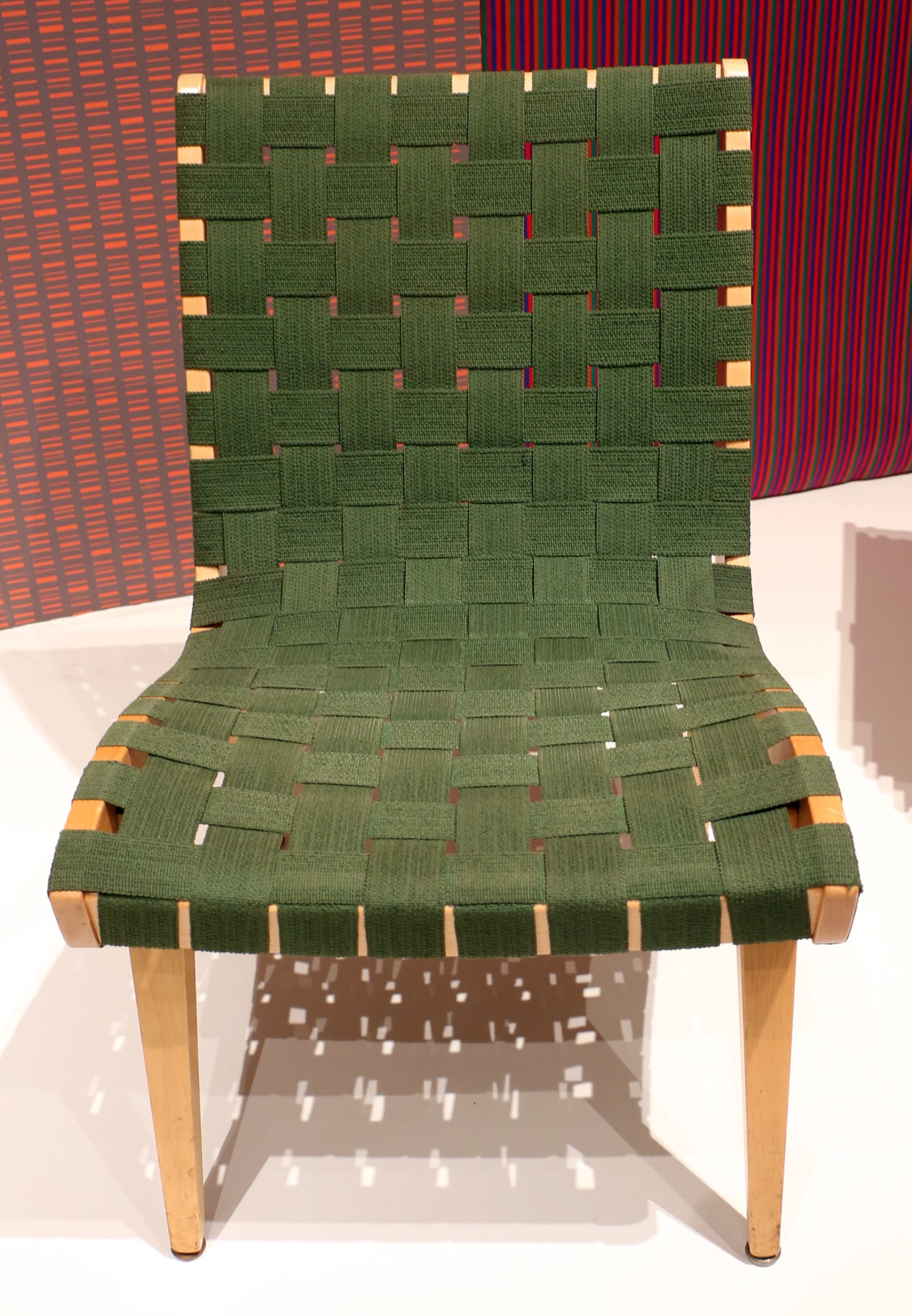
The 654W (walnut frame, woven cotton webbing seat and back) is not a chair that makes its argument loudly. This is the whole point. The Museum of Modern Art holds it in its permanent collection, but it doesn’t sit in that collection the way the Barcelona Chair does: as an object of formal ambition. It sits there as a demonstration that formal restraint is also a position.
Risom was explicit about this. “Furniture is not sculpture, nor is a particular design created only for visual appearance.” That sentence, recorded in Knoll’s designer documentation, is the opposite of the Juicy Salif argument: the idea that an object can be so formally audacious that its function becomes a secondary concern. Risom meant something harder to achieve: that function carried with dignity, without ornament, was worth doing precisely because it was harder than styling.
The chair sits in that tradition while also demonstrating something the Scandinavian-American idiom had to work out under American conditions. The Wassily Chair used industrial materials, tubular steel specifically, to make a statement about the relationship between modernism and machine production. Risom’s webbing was not a machine material. It was a military surplus material. The argument is different: not “industry can produce beautiful things” but “scarcity can produce honest things.”
By the time Lyndon Johnson chose a Risom executive office chair for the Oval Office, the argument had been made and accepted. The Oval Office is the most documented room in America. Johnson did not choose the Barcelona Chair or an Eames Lounge Chair — pieces with more formal celebrity. He chose Risom. That tells you something about what Risom’s aesthetic meant to the American professional-executive class by the 1960s: it read as authority without display, which is a specific and difficult register to achieve.
It read as authority without display, which is a specific and difficult register to achieve.
JRD ran for twenty-five years, producing a coherent domestic vocabulary around the chairs: walnut desks, side tables, storage, all built in the same idiom. Risom sold the company to Dictaphone in 1970, stayed as CEO for three years, and then relocated to New Canaan, Connecticut, where he founded Design Control, a consultancy. He died on December 9, 2016, at 100. The 654W remains in continuous production through Knoll.
The objects that made the argument
Lounge Chair Model 654W (1941–42)
Birch and walnut frame, woven cotton webbing seat and back (originally surplus nylon parachute straps, now heavy-duty cotton). Designed within material rationing for the Hans Knoll Furniture Company. In continuous production since 1942. MoMA permanent collection. The chair that established the formal language Risom would work in for the next thirty years.
Risom Executive Office Chair (c. 1950s–60s)
The chair Lyndon Johnson chose for the Oval Office. Upholstered seat, wood frame, a warmer and more institutional version of the Risom vocabulary for the American corporate interior. Less photographed than the 654W, but more revealing: it shows how the design language translated from residential to professional contexts without losing its restraint.
JRD walnut desk and side tables (1940s–60s)
Risom Design’s broader domestic catalog. Clean walnut construction, functional proportions, the Scandinavian restraint of the chairs applied to the full American interior. These pieces document how Risom built a complete domestic vocabulary, not just a signature chair. The coherence across the catalog is itself an argument about what furniture design is supposed to do.
Knoll 600 Line (1942)
The inaugural collection: fifteen of twenty pieces by Risom. Stools, armchairs, lounges. Cedar and surplus webbing. Established the house style that Knoll would build its reputation on. The full range of this collection, documented in Scandinavian design tradition scholarship, shows how completely Risom understood the formal problem he had been given.
A-Chair (designed for Fredericia Furniture)
A later-career piece produced by the Danish manufacturer Fredericia, returning Risom’s vocabulary to Scandinavian production. Metal base variant, clean silhouette, cotton webbing. Shows the durability of the 1941 design language across decades and across manufacturing contexts.
Shop the Collection
The 654W is sold through Knoll and Design Within Reach at prices that reflect its status as a production classic. For readers who want the Risom aesthetic at an accessible entry point, these selections represent the closest available approximation on Amazon.
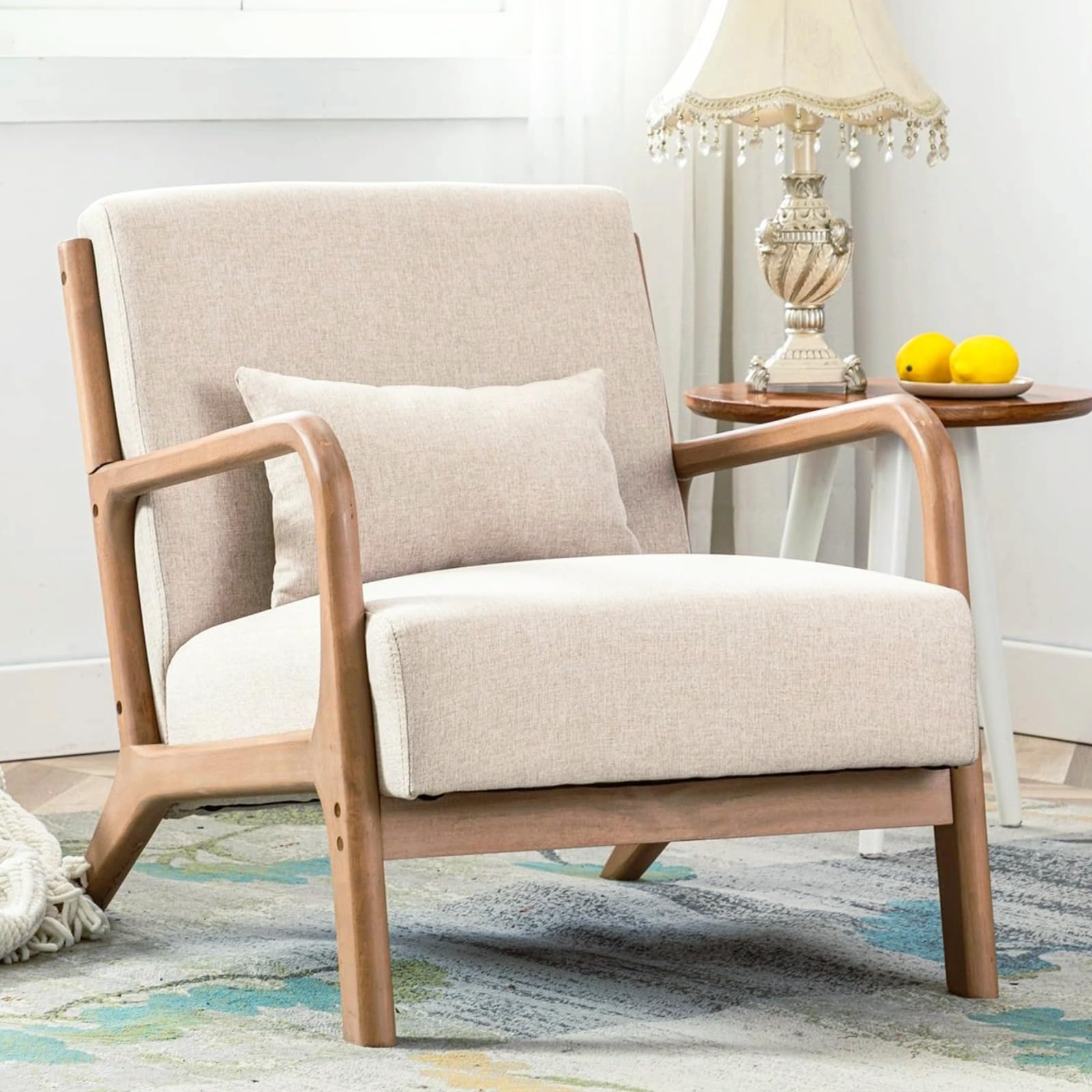
ANJ Mid Century Modern Accent Chair
Solid wood frame in walnut finish, clean MCM silhouette, the closest Amazon approximation to the Risom formal vocabulary at a fraction of the Knoll price.
Scandinavian-style walnut side tables: Risom’s JRD produced tables alongside chairs; the full domestic vocabulary requires surfaces as well as seating.
Further Reading
Two books, not three. Both make the case for owning, not just reading.
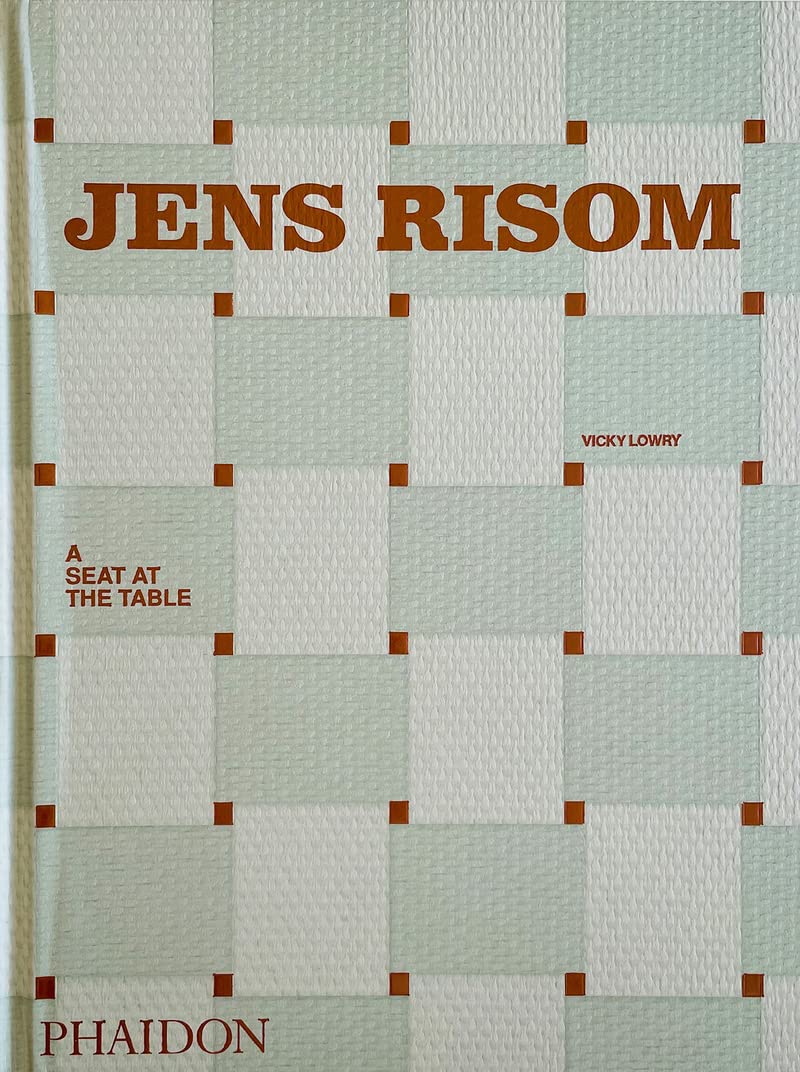
Jens Risom: A Seat at the Table
Vicky Lowry (Phaidon, 2021). The only monograph on Risom, and the primary document for anyone who wants to understand the full arc of his career and not just the 654W. Phaidon’s production quality does the furniture justice.
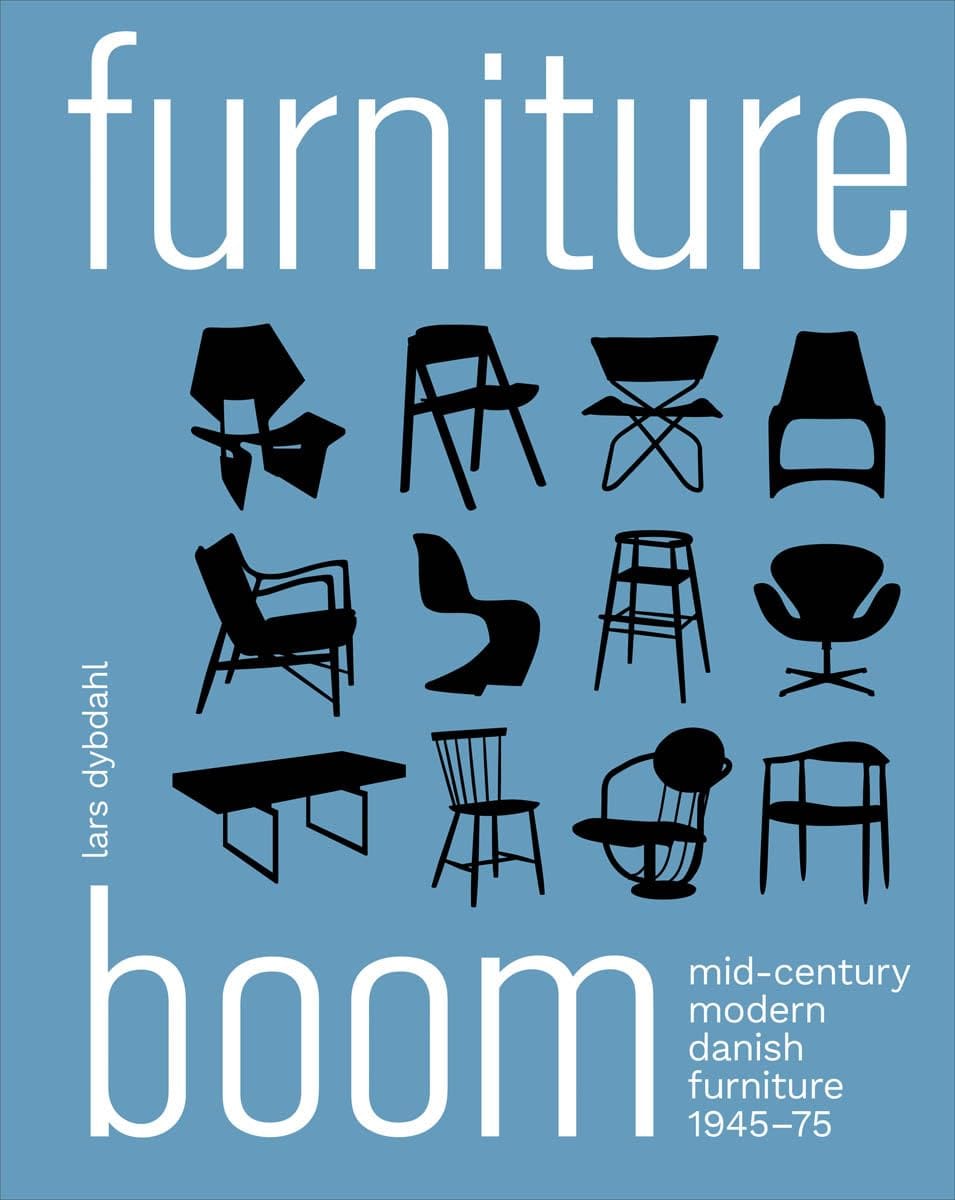
Furniture Boom: Mid-Century Modern Danish Furniture 1945–1975
Lars Dybdahl (Strandberg, 2018). Places Risom in the larger Danish furniture export story, providing the context that explains why his American work mattered both here and back home. Essential for understanding the mid-century seating canon in which the 654W belongs.
Frequently Asked Questions
What is the Jens Risom chair made of?
The original 654W Lounge Chair was built from a birch and walnut frame with surplus nylon military webbing (parachute straps rejected during wartime production). Today’s version, in continuous production through Knoll, uses a walnut frame with heavy-duty cotton webbing. The form is unchanged.
Is the Jens Risom lounge chair still in production?
Yes. Knoll has kept the 654W in continuous production since its introduction in 1942. It is one of the longest uninterrupted production runs in American furniture history.
Why did Jens Risom use webbing instead of fabric or leather?
Because webbing was what he could get. Wartime material rationing restricted conventional upholstery materials in 1941–42. Risom sourced surplus nylon from military production and built the design around the constraint rather than treating it as a problem to work around. The webbing became the chair’s formal argument, not an apology for what was missing.
How does the Jens Risom chair compare to other mid-century chairs?
The 654W occupies a specific position in the Barcelona Chair generation of mid-century seating: it is less formally theatrical than Mies van der Rohe’s work, less experimentally structural than the Eames’ plywood pieces, and more directly about material honesty than most of its contemporaries. Where the Barcelona Chair was designed for an empty ceremonial room, the 654W was designed to be built from scrap and used daily.
Where can I see a Jens Risom chair in person?
The 654W Lounge Chair is in the permanent collection of the Museum of Modern Art in New York. Knoll showrooms carry the current production version.

About Joe Post
Joe Post holds an MFA in Art from California Institute of the Arts (CalArts) and has done additional graduate work at the School of the Art Institute of Chicago. He founded Art Design Ideas to write about design as cultural argument — the decisions, contradictions, and assumptions built into the objects we live with.