

Raymond Loewy vs Dieter Rams is the central argument in industrial design: does good design seduce or refuse? Loewy held that beauty is a sales tool and the market is the measure. Rams held that restraint is a virtue and commerce is a corruption risk. Both built bodies of work that prove their case.
What each of these designers was actually arguing
Loewy arrived in New York in September 1919 with, by his own account, fifty dollars and a sketchbook. He spent the next sixty years making the case that beauty sells. The gap between what consumers could already accept and what they might learn to want was the productive space for design. He called this the MAYA principle: Most Advanced Yet Acceptable. The principle is not a limitation. It is a theory of how change propagates through a market. You move people as far as they can go, not as far as you want to take them.
That theory produced the Sears Coldspot refrigerator (1935), which increased Sears sales five-fold within two years of its redesign. It produced the Studebaker Avanti (1963), the Air Force One livery (1962), the Shell logo (1971), and the NASA Skylab interior. The measure of each was adoption. If people bought it, used it, recognized it: it worked. Commerce is not the corruption of design in Loewy’s framework. It is the laboratory.
Dieter Rams joined Braun in 1955 at age twenty-three, became head of design in 1961, and spent the next four decades reducing everything to what was necessary. His guiding principle, “Weniger, aber besser” (less but better), is the inverse of Loewy’s. Where Loewy asked how far he could push, Rams asked what he could remove. The Ten Principles of Good Design that Rams formalized are not aesthetic preferences; they are ethical propositions. Principle 6: good design is honest — it does not make a product appear more innovative than it is. Principle 10: good design is as little design as possible. Design has obligations beyond the transaction. Commerce is the context, not the criterion.
These are not temperamental differences. They are incompatible theories of what design is for. Loewy’s measure is uptake. Rams’s measure is integrity. The comparison does not resolve into a winner. It clarifies what you are optimizing for.
Where Loewy and Rams actually disagree
Philosophy
Loewy’s operating principle is descriptive: what will people accept, and how close can I get to the edge of that without losing them? MAYA is not a moral position. It is a measurement. The test of a design is whether the market absorbed it. Loewy could point to the Lucky Strike redesign (the $50,000 bet with American Tobacco president George Washington Hill that Loewy couldn’t improve the pack, which he won by replacing the green background with white, cutting printing costs and improving shelf visibility) and say: the market decided. That is evidence.
Rams’s operating principle is normative: what should design do, regardless of whether the market demands it? The Ten Principles are obligations. Principle 9 (good design is environmentally friendly) appeared in Rams’s work in the 1970s when no consumer was asking for it. Rams called planned obsolescence “a crime in design” decades before the term entered commercial discourse. For Rams, the measure is not whether people bought it. It is whether the design was worth making.
Neither framework wins outright. Loewy’s measure is uptake. Rams’s measure is integrity.
Methods
Loewy ran user acceptance testing before launch: client-funded research, iterative refinement toward market-readiness. The Coldspot redesign process involved testing which formal changes consumers noticed and which they dismissed. The result was not Loewy’s aesthetic preference; it was the design the research pointed to. The method is commercial in the best sense: grounded in evidence, oriented toward adoption.
Rams worked through material reduction and systematic function analysis. The 606 Universal Shelving System, designed in 1960 for Vitsoe, has been sold with minor changes for more than sixty-five years. Its longevity is the method’s proof — not that it sold well, but that it solved a problem correctly enough that no subsequent redesign improved on it.
Rams wins on durability. The 606 is still current. Most Studebakers are in museums.
Legacy and industry influence
Loewy shaped mid-century American commercial aesthetics at a scale no other designer of his era approached. The Greyhound Scenicruiser, Air Force One, Lucky Strike, the Coca-Cola bottle, Shell and Exxon logos: these are not design-world objects. They are objects that passed through ordinary American life for decades. Loewy also proved that industrial design could be a profession with a public identity. His appearance on the cover of Time on October 31, 1949 was not incidental. It established that design had practitioners who warranted the same cultural attention as architects or painters.
Rams’s influence on contemporary product design runs primarily through Jonathan Ive and Apple. The original iPod (2001) mirrors the formal language of the Braun T3 transistor radio (1958). The iOS calculator mirrors the ET66 (1987). Ive sent Rams an iPhone with a letter acknowledging the influence. Apple’s commercial success in the 2000s — arguably the most consequential commercial design story of the past thirty years — is in direct lineage from Braun’s formal language.
The winner here is disputed, and the dispute is instructive. Loewy’s influence is broader but more diffuse. Rams’s influence on Apple is traceable and carries further weight in contemporary product design. But Apple’s success is also exactly the kind of outcome Loewy’s MAYA principle predicts. The two lineages are not as separate as they appear.
Commerce vs. restraint
Loewy designed for clients who needed to sell products. That is not a weakness in his framework. It is the framework. The Lucky Strike bet is the clearest case: a commercial constraint (George Washington Hill’s skepticism, the $50,000 wager) produced a design decision (white background replacing green) that was both cheaper to print and more effective on the shelf. The commercial pressure and the design improvement were the same thing.
Rams spent forty years as design director at Braun, a company owned by the same family from 1951 until Gillette acquired it in 1967. The Braun family’s patronage gave Rams working conditions: time, formal freedom, and a client who valued restraint. Those conditions are difficult to reproduce in most commercial contexts. When Rams called planned obsolescence a crime, he was speaking from within a company that had chosen not to practice it. That position is principled. It is also structurally privileged.
Neither position wins outright. Loewy’s pragmatism has been vindicated commercially. Rams’s restraint has been vindicated culturally. The comparison doesn’t resolve. It clarifies what you’re optimizing for.
Ego and self-presentation
Loewy understood his own persona as part of the work. He wore custom suits, drove Studebakers, and made himself available to the press in a way that positioned design as a field worth covering. The Time cover was the apex, but the self-promotion was consistent throughout his career. Whether this obscures the work is a fair question. “The Man Who Shaped America” is a large claim, and some of Loewy’s posthumous reputation is inseparable from the personal brand he constructed.
Rams is publicly reluctant. He has been the subject of two Gary Hustwit documentaries, Objectified (2009) and Rams (2016), both largely against his wishes. His stated preference is that the work should speak. In 2007, the Raymond Loewy Foundation gave Rams its Lucky Strike Designer Award, the one moment of formal institutional recognition crossing between the two men’s legacies, twenty-one years after Loewy’s death.
Neither wins this category, and both were correct given their context. Loewy’s self-promotion helped validate design as a profession. Rams’s restraint helped validate it as a discipline.
What each designer gets right — and gets wrong
Loewy — Pros:
- MAYA is a testable hypothesis, not an aesthetic preference — Loewy could measure whether it worked
- Proved design could be a commercial profession, not just an artistic pursuit
- Career breadth no other designer of his era approached: logos, transportation, interiors, packaging, aerospace interiors
- Client relationships were long and sustained — Studebaker, Pennsylvania Railroad, NASA
Loewy — Cons:
- Self-promotion can obscure the work — how much of the legacy is the man versus the brand he built around himself?
- Styling-driven work dates in ways Rams’s formal restraint does not — some Loewy cars look period-specific in a way the 606 shelf system does not
- MAYA is ultimately conservative: it moves toward the acceptable, not necessarily toward the right
Rams — Pros:
- The Ten Principles are internally consistent and externally verifiable — a framework with real prescriptive weight
- Long-lasting work: the 606, the 620 chair, the Braun ET66 calculator are all still considered canonical
- Environmental stance was forty years early — spoke against planned obsolescence in the 1970s
- Formal restraint holds across decades without becoming dated
Rams — Cons:
- The moral framing can become self-righteous — not every product needs to be ethically interrogated before it can be well-designed
- Restraint as a principle risks producing work that is admirable but cold
- Braun-era working conditions depended on the Braun family’s patronage — that model is not reproducible in most commercial contexts
Which should you choose?
Choose Loewy’s framework if: you are solving a commercial design problem where adoption is the success criterion. MAYA is the right lens when the question is “will people accept this?” rather than “is this correct?” If you’re choosing furniture for a room that needs to work with objects people already own, Loewy’s tolerance-for-novelty logic applies directly. For product decisions at the MAYA-relevant end of the market (streamline-era barware, mid-century modern furniture that extends an existing room vocabulary), see our guide to Raymond Loewy inspired products.
Choose Rams’s framework if: you are willing to optimize for longevity over uptake. The Ten Principles work when the client or buyer has the patience to let the design outlast its context. If you’re choosing objects meant to last decades rather than seasons, Rams’s restraint-as-virtue logic is the more durable framework. Objects built on Braun-adjacent formal language tend to hold their coherence longer than objects built around a trend. For lounge chairs and seating that applies this principle, see our guide to designer lounge chairs. For furniture that extends rather than disrupts a room, see our guide to minimalist furniture for small spaces.
The honest answer is that you use both. MAYA tells you how far you can push within the current context. The Ten Principles tell you what pushing should accomplish. The designers never intersected in life. Their frameworks, applied together, are more useful than either alone.
One caveat: Rams’s framework was developed inside conditions, a single client, family ownership, and multi-year project timelines, that most design problems don’t replicate. MAYA was built for the opposite: multiple clients, commercial pressure, tight timelines. The frameworks are more equally useful as analytical lenses than as production methods.
Further Reading
There are three books that do the actual work here. Reading them together makes the comparison audible rather than theoretical.
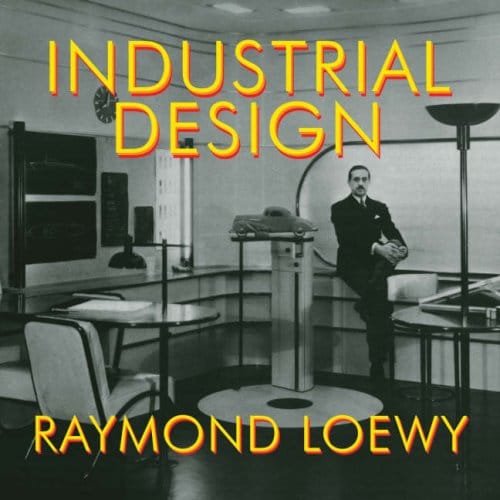
- Raymond Loewy, Industrial Design (Overlook Press, 1979): The primary source — Loewy’s own project catalog with photographs of every major commission. Reading this alongside the Lovell monograph on Rams makes the contrast between their formal languages concrete.
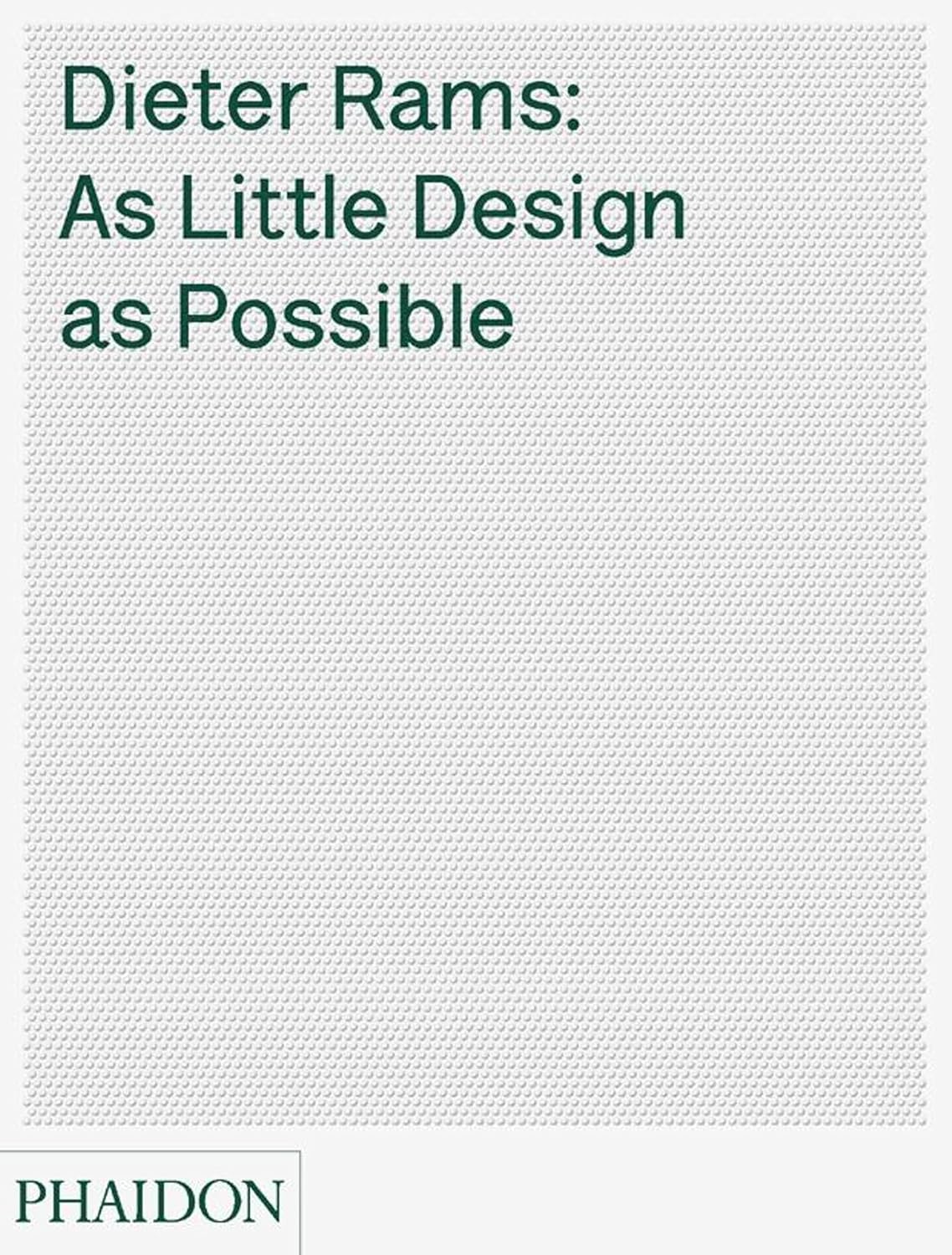
- Sophie Lovell, Dieter Rams: As Little Design as Possible (Phaidon, 2011): The definitive Rams monograph, with a foreword by Jonathan Ive that locates Rams’s influence in contemporary product design rather than just Braun history. Ive’s introduction is worth reading on its own terms.
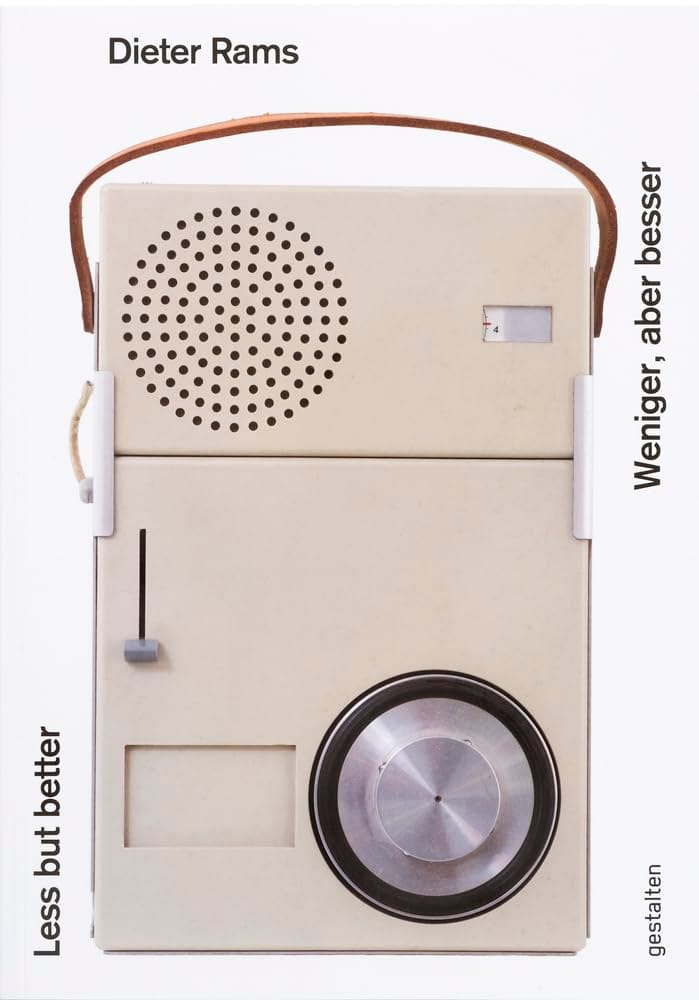
- Dieter Rams, Less But Better (Gestalten, 2014): Rams in his own words — the Ten Principles with his commentary. More condensed than the Lovell monograph and better suited to keeping on a desk as a reference against which to measure specific design decisions.
Frequently Asked Questions
What is the difference between Raymond Loewy and Dieter Rams?
Loewy and Rams represent two different theories of what design is for. Loewy held that design is a commercial act — the measure is whether people adopted it. He formalized this as the MAYA principle: Most Advanced Yet Acceptable. Rams held that design is an ethical act — the measure is whether the object was worth making, regardless of market reception. He formalized this as the Ten Principles of Good Design. Both produced bodies of work that validate their frameworks on their own terms.
What is the MAYA principle and who invented it?
The MAYA principle — Most Advanced Yet Acceptable — was coined by Raymond Loewy and formalized in his 1951 autobiography Never Leave Well Enough Alone. The principle holds that consumers are torn between neophilia (attraction to novelty) and neophobia (resistance to change that moves too far from the familiar). Loewy argued that successful design finds the furthest point of innovation within the market’s current tolerance for change. The test is whether people adopted it.
Did Dieter Rams and Raymond Loewy ever meet or acknowledge each other?
There is no documented evidence that Loewy and Rams ever met directly. Loewy died on July 14, 1986, in Monte Carlo, when Rams was fifty-four and still active at Braun. The one moment of formal institutional crossover came in 2007, when the Raymond Loewy Foundation gave Rams its Lucky Strike Designer Award — twenty-one years after Loewy’s death.
Why did Jonathan Ive credit Dieter Rams but not Raymond Loewy?
Ive’s design language at Apple drew directly from Rams’s Braun-era formal vocabulary — the iPod’s relationship to the Braun T3 transistor radio (1958) and the iOS calculator’s relationship to the ET66 (1987) are well-documented. Ive sent Rams an iPhone with a letter acknowledging the influence. The Loewy lineage at Apple is less direct, though Apple’s commercial success — reaching consumers at the edge of their tolerance for novelty without alienating them — is precisely what Loewy’s MAYA principle describes.
Which designer had more lasting influence — Loewy or Rams?
The question depends on the measure. By breadth of cultural reach, Loewy’s influence is larger — he shaped mid-century American commercial aesthetics across categories that passed through ordinary life for decades. By traceable impact on contemporary product design, Rams’s influence is more consequential — his formal language entered consumer electronics at scale through Apple and continues to inform product design in ways Loewy’s streamline vocabulary does not. Both men’s frameworks remain useful, for different problems.
How do you apply the MAYA principle when choosing design objects?
The MAYA test for buyers works on three levels: does the object look slightly ahead of its moment without looking alien in the room it’s going into? Does the silhouette read immediately, without requiring study? Does the form make the use easier, or does it work against the function? Objects that pass all three are operating in the productive middle — close enough to familiar to be acceptable, far enough to be worth choosing. For objects in the Loewy-influenced streamline vocabulary, see our guide to Raymond Loewy inspired products.
For the broader context of this work, see the Design Legends hub — profiles of the designers and movements that shaped modern design.

About Joe Post
Joe Post holds an MFA in Art from California Institute of the Arts (CalArts) and has done additional graduate work at the School of the Art Institute of Chicago. He founded Art Design Ideas to write about design as cultural argument — the decisions, contradictions, and assumptions built into the objects we live with.