
The Muji aesthetic is the look of Mujirushi Ryōhin, Japanese for “no-brand quality goods”: plain, unlogoed objects in polypropylene, natural wood and undyed cotton, arranged so nothing competes for attention. It began in 1980 as a Seiyu supermarket private label shaped by graphic designer Ikko Tanaka. Since 2001 art director Kenya Hara has described it as emptiness, a quiet room that leaves space for the person living in it.
Our Top Picks
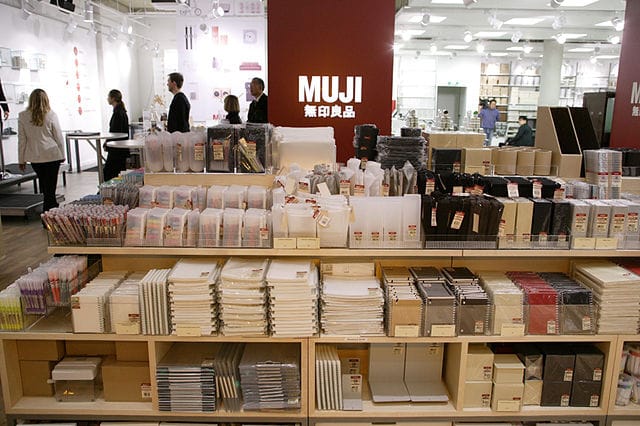
These three polypropylene storage pieces are the core of the Muji system. They share the same dimensional logic, stack together, and expand without replanning. The two books are the philosophical backing. If you want to understand what you are building, not just copy the look, they are the place to start.
The system is additive. Start with one piece, then add units as needs grow — without replacing what you already have.
- Muji Polypropylene 2-Drawer Storage Box, A4 Wide (Mid-Range): The foundational piece, semi-translucent, A4-standardized, and stackable. It is where the system starts, because it demonstrates in one object that standardized containers produce visual calm by removing the need to sort by appearance.
- MUJI 3 Box Drawer Unit, Polypropylene, White, Small (Mid-Range): The modular column. Drawers can orient horizontally or vertically, dimensions match the A4 Wide line, and units stack upward without redesigning the whole configuration.
- Muji Polypropylene 6 Drawer Unit, White, Small (Mid-Range): Six equal-depth drawers for desk-top organization. The equal depth is a design position. No category gets more space than another, which removes the junk-drawer problem.
- Muji (Mid-Range, Further Reading): The 30th anniversary monograph, with texts by Jasper Morrison, Naoto Fukasawa, and Kenya Hara. Hara’s sections explain the brand’s design philosophy in terms that go beyond the objects themselves.
- Designing Design by Kenya Hara (Mid-Range, Further Reading): Hara’s own account of ‘emptiness’ as a design value. Not a Muji book specifically, but it is the source text. This is the philosophical reason why this system produces the effect it does.
Quick Decision Guide
- Best for starting from scratch: Muji Polypropylene 2-Drawer Storage Box, A4 Wide. The system is additive; start here, then add drawer units as needs grow.
- Best for desk organization: Muji Polypropylene 6 Drawer Unit, White, Small. Equal-depth drawers mean you stop making daily decisions about where things belong.
- Best for building the full look fast: MUJI 3 Box Drawer Unit, Polypropylene, White, Small. Compatible with the A4 Wide system, expandable shelf by shelf.
- Best for understanding why it works: Muji monograph by Morrison, Fukasawa, and Hara (Rizzoli, 2010). Not decor advice; a philosophical account of what the system is actually doing.
- Best for the reader coming from Scandinavian design: Both traditions use restraint to communicate values, but their origins differ in ways that matter. Scandinavian design’s restraint comes from social democratic principles; Muji’s comes from commercial anti-consumerism, a supermarket private label that made frugality into an aesthetic. If you are already drawn to Scandinavian design, Muji will feel immediately legible. See our guide to best Scandinavian design products — the differences are worth understanding before you mix the two systems.
Full Comparison
| Product | Best For | Price Range | Standout Feature | Link |
|---|---|---|---|---|
| PP 2-Drawer Box (A4 Wide) | Entry point / horizontal surfaces | Mid-Range | Stackable, semi-translucent, A4-size standardized | Buy |
| 3 Box Drawer Unit | Vertical expansion / modular build | Mid-Range | Horizontal or vertical orientation, same dimension family | Buy |
| 6 Drawer Small Unit | Desks / small-item organization | Mid-Range | Six equal-depth drawers, no visual hierarchy needed | Buy |
What makes the Muji system work as a system, not just a style?
The PP storage line is designed around a single constraint: every piece shares the same external dimension family. A 2-Drawer Box stacks onto a 3 Box Drawer Unit. A 6 Drawer Unit sits beside the column without a gap. This is the difference between a system and a collection of similar-looking objects. Generic storage containers may share a color family; Muji’s PP line shares tolerances. The visual calm that results is not accidental and not purely aesthetic. It is what happens when the objects are physically interchangeable. You are not choosing which container looks right. You are choosing which container fits — and they all do.
How to build a Muji aesthetic room by room
The storage system is the backbone, but a Muji room is also a palette and a set of habits. Keep color to what the materials give you: white, grey, oatmeal, and pale wood such as oak or ash. Keep surfaces mostly clear and put the clutter behind matching fronts. For the broader rules this borrows from, see our guide to the key principles of minimalist modern interiors.
Living room
Choose low, light-wood furniture and one textile family, undyed linen or cotton in one or two tones. Give storage a single wall of closed shelving so the rest of the room can stay open. Light it with warm, diffused sources such as a paper or fabric shade rather than bright overhead downlights.
Bedroom
Put a low bed frame in natural wood under plain cotton or linen bedding, with no pattern. Inside the closet, fold clothes into matching polypropylene drawers so the wardrobe follows the same dimensional logic as the rest of the house. Keep one or two objects on the nightstand.
Kitchen
Decant dry goods into clear containers of the same size and shape, so packaging stops setting the color scheme. Use one set of plain white ceramics and keep tools in drawers rather than on the counter. The counter should read as a work surface, not a display.
Desk and home office
Start with the 6 Drawer Unit for small supplies and A4 files in matching boxes. Route cables out of sight. Leave the desktop empty except for what the current task needs; that empty surface is the point of the whole approach.
What each Muji product actually does
Muji Polypropylene 2-Drawer Storage Box: The Cornerstone
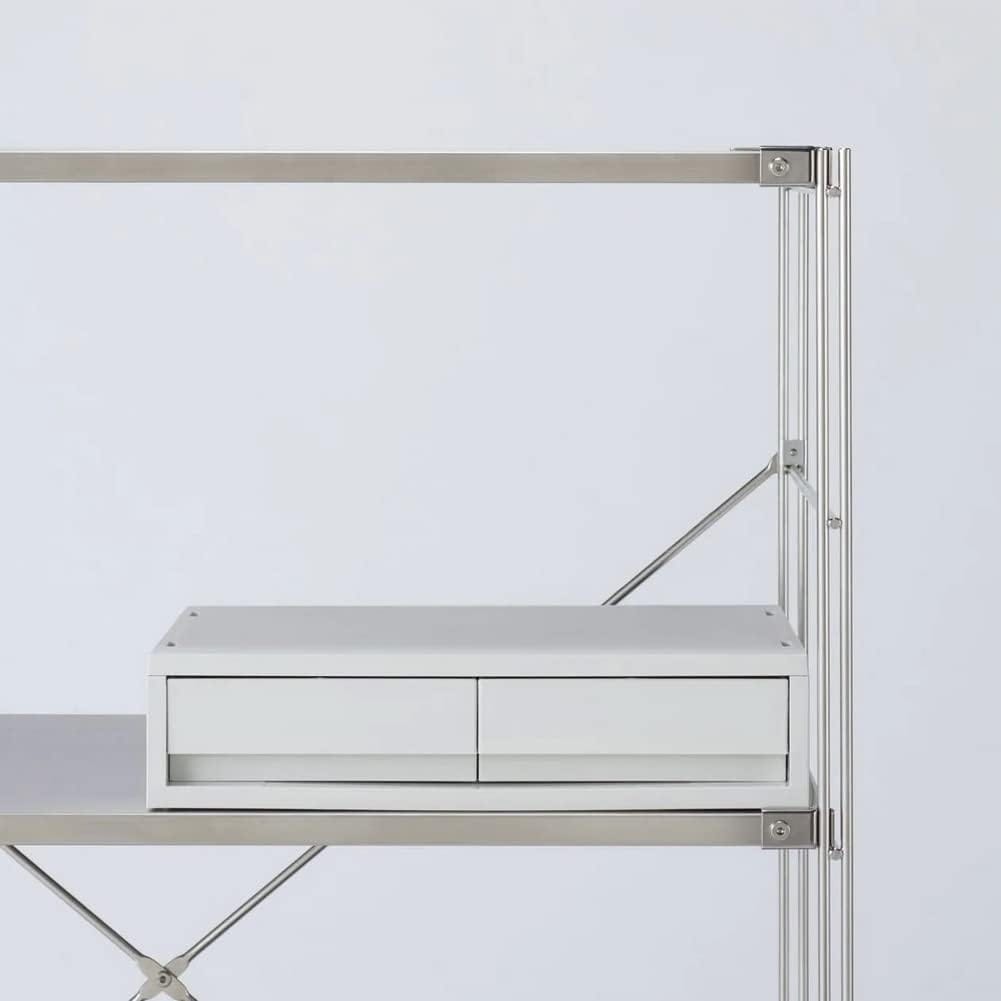
Muji Polypropylene 2-Drawer Storage Box, A4 Wide
The foundational piece in Muji’s PP storage system. Semi-translucent, A4-standardized, stackable. Demonstrates in one object that standardized containers produce visual calm by removing the need to sort by appearance.
The PP 2-Drawer Box (A4 Wide) is the argument in object form. Its grey-white polypropylene is semi-translucent, so contents are visible without labels. Its dimensions are standardized to the A4 format, which means every unit in the PP line fits with every other unit. When you place several of them on a shelf, they produce a particular kind of quiet: uniform depth, uniform color, nothing demanding attention.
Pros:
- Standardized A4 width; compatible with all other PP line pieces
- Semi-translucent so contents are visible without labeling
- Stackable without additional hardware
- Polypropylene is dishwasher-safe and durable
- The most widely replicated form in Muji’s catalog
Cons:
- Grey-white tone reads cold in rooms with warm wood tones
- Shallow depth; not suited for objects taller than document height
Anyone beginning to build the PP storage system will start here, as will anyone replacing ad hoc containers on a desk or shelf. It demonstrates the argument that standardization produces calm, not through formal beauty, but through the elimination of visual decisions.
MUJI 3 Box Drawer Unit: The Modular Column
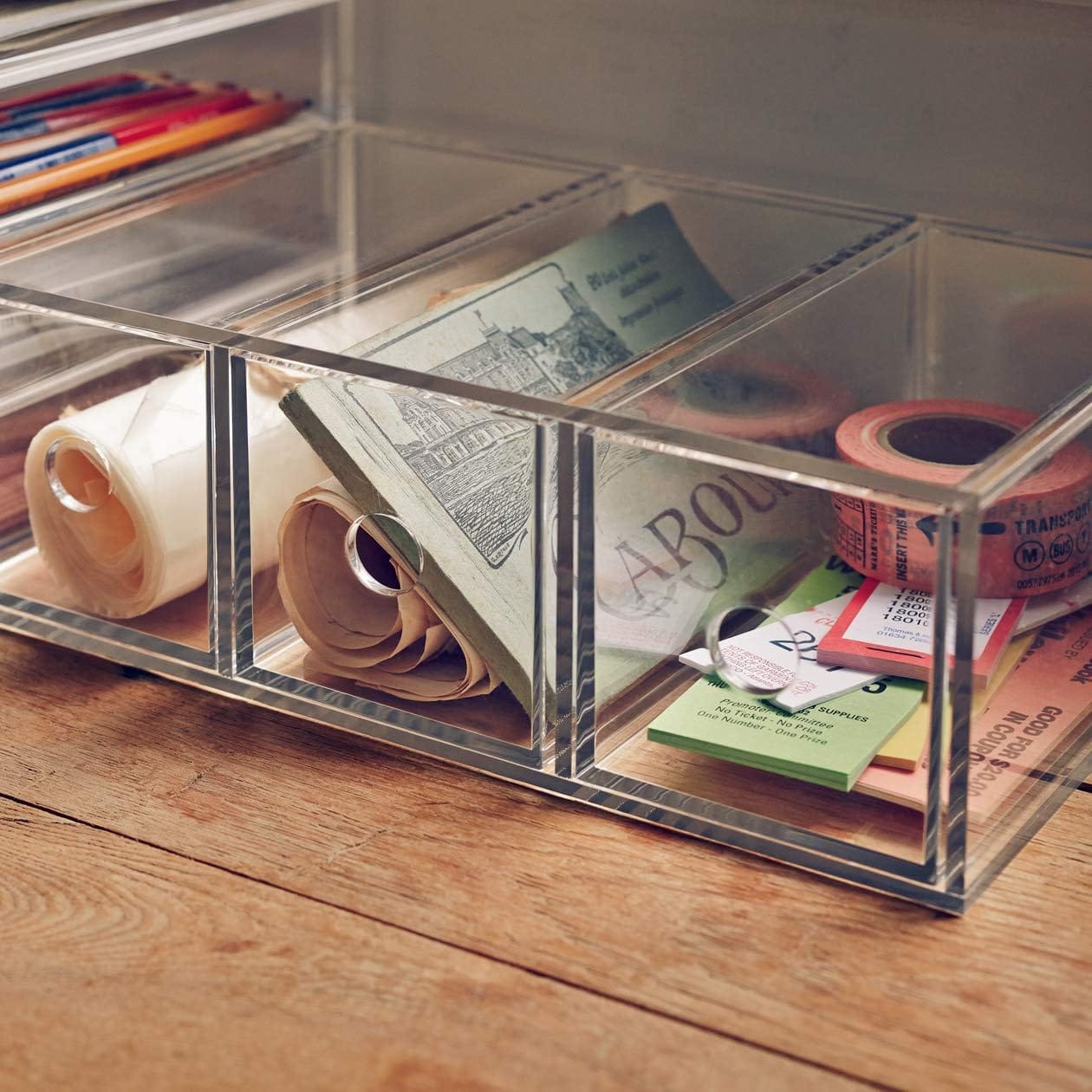
MUJI 3 Box Drawer Unit, Polypropylene, White, Small
The modular column. Drawers orient in either direction, dimensions are compatible with the A4 Wide line, and units stack upward without redesigning the whole configuration.
The 3 Box Drawer Unit does something the 2-Drawer Box cannot: it builds vertically. Drawers orient in either direction, which means the same unit works as a low shelf organizer or a tall column. Dimensions are compatible with the A4 Wide line. Stack two units, and you have a six-drawer column. Stack three, and the column reaches desk height. The logic is serial. You add; you do not redesign.
Pros:
- Drawers orient horizontally or vertically
- Dimensionally compatible with A4 Wide line
- Three drawer depths accommodate varied object heights
- Units stack and expand without replanning the configuration
Cons:
- No locking mechanism; drawers can shift if bumped
- White-grey tone may not integrate with warm natural wood furniture
This unit suits anyone building a vertical storage column in an office or living space who wants to expand over time without starting over. It turns storage into architecture. The columns can grow as needs change, and they do so without visual disruption. Each added unit speaks the same language as the last.
Muji Polypropylene 6 Drawer Unit: The Desk Tool
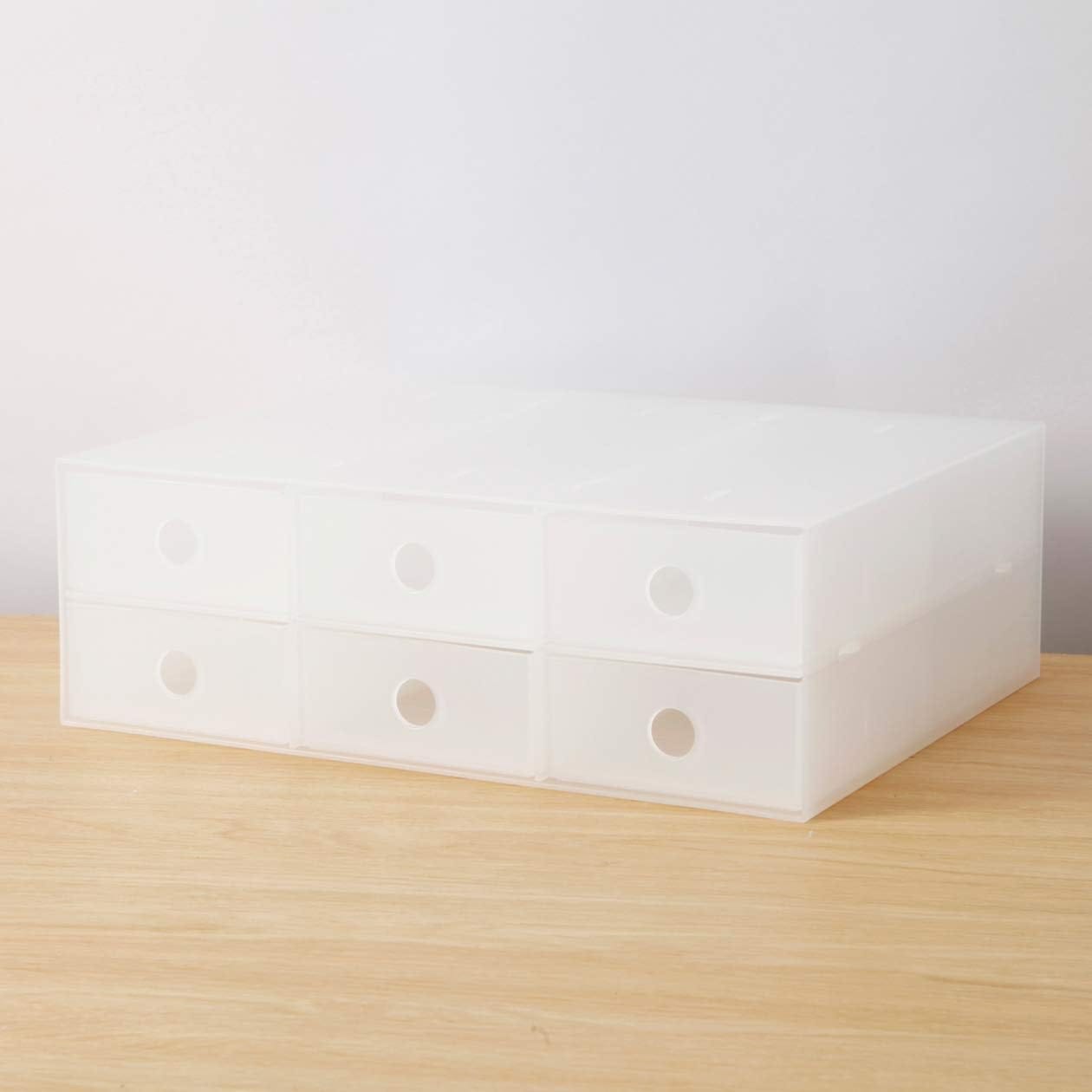
Muji Polypropylene 6 Drawer Unit, White, Small
Six equal-depth drawers for desk-top organization. The equal depth is a design position: no category gets more space than another, which removes the junk-drawer problem.
Six drawers of equal depth on a small footprint. For a desk surface, this is the structural argument: because no drawer is deeper than another, no category gets priority. Pens, paper clips, notepads, cables — they each get a drawer, and none of them colonizes the others. The constraint is deliberate. Naoto Fukasawa and Jasper Morrison’s ‘Super Normal’ concept, documented in their 2007 Lars Müller monograph Super Normal, describes this as design so appropriate it disappears. You stop noticing the container and start noticing the work.
Pros:
- Six drawers for granular organization
- Small footprint; doesn’t dominate a desk surface
- Compatible with A4 PP system
- Equal-depth drawers prevent the hierarchy problem that produces junk drawers
Cons:
- Small unit size limits per-drawer capacity
- Not suited for larger items or anything taller than standard office supplies
For anyone working at a desk who wants to stop making daily decisions about where things go, this is the piece. Equal-depth drawers are a design position. No one category gets more space. The constraint is the point.
Equal-depth drawers are a design position. No category gets more space than another. The constraint is the point.
Why the Muji aesthetic’s ‘no-brand’ is still a brand argument

Muji was founded in December 1980 as a private label for the Seiyu supermarket chain: everyday goods in plain packaging at reduced prices, built as a direct response to the perceived waste of Japan’s post-economic-miracle consumption culture. Kenya Hara, art director since 2001, reframed the brand’s philosophy from ‘anti-brand’ to ‘emptiness’ (ku, 空): an unmarked surface as invitation rather than absence.
The tension is worth naming directly: Muji’s ‘no-brand’ is now itself a brand signal. A person who buys Muji is communicating something. The aesthetic of rejection is still an aesthetic, and rejecting branded goods through a recognizable system is still a brand choice. That does not make the system less useful as a design approach. It makes the choice more honest. You are not stepping outside the market by buying Muji. You are choosing a different position within it. That clarity is, in its own way, exactly what the system offers.
Further Reading
These two books work together: the monograph is the product-level account, and Hara’s own text is the philosophical source.
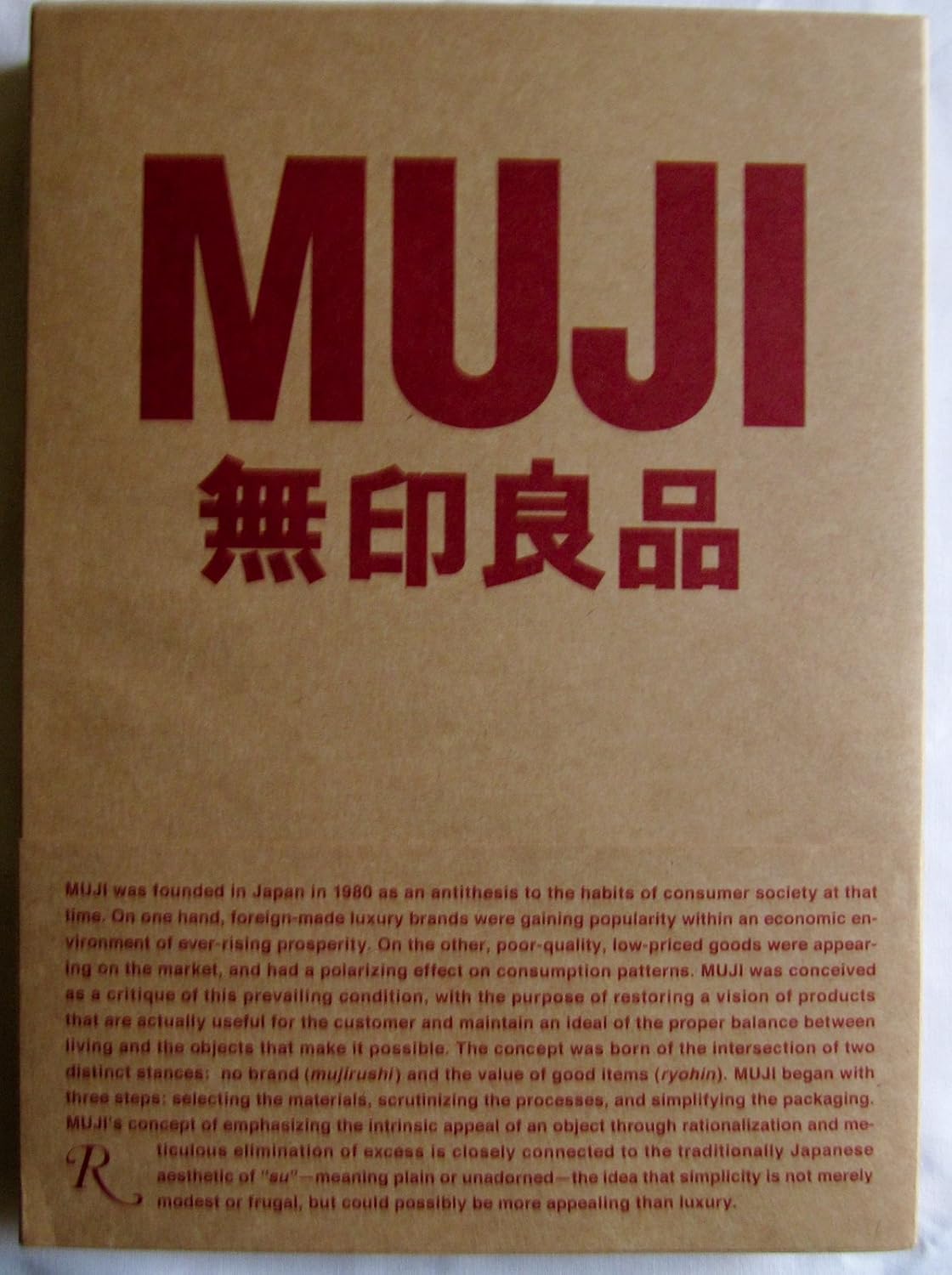
Muji (Rizzoli, 2010)
Jasper Morrison, Naoto Fukasawa, and Kenya Hara, Muji (Rizzoli, 2010): The 30th anniversary monograph. Morrison and Fukasawa write on product design philosophy; Hara writes on the brand’s design identity. The best single source for understanding the system, not just copying the look.
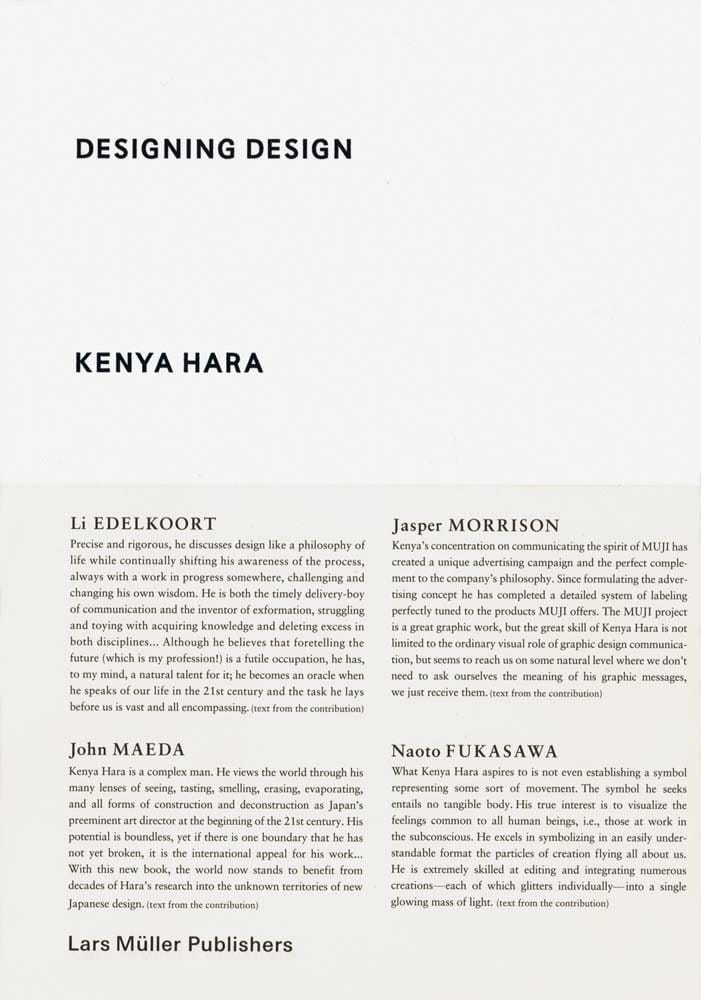
Designing Design (Lars Müller Publishers, 2007)
Kenya Hara, Designing Design (Lars Müller Publishers, 2007): Hara’s account of ‘emptiness’ as a design value, more demanding than the monograph, but it explains why the system produces the effect it does. The philosophical reason Muji’s restraint feels different from Western minimalism.
Frequently Asked Questions
What is the Muji aesthetic?
The Muji aesthetic is a home design approach derived from the Japanese brand Mujirushi Ryōhin, founded in 1980 as a private-label response to over-branded consumer goods. It uses neutral materials (polypropylene, natural wood, undyed cotton) in objects chosen for function rather than appearance. The result is a visual environment where nothing competes for your attention.
How do I start building a Muji aesthetic at home?
Start with a single polypropylene storage piece: the A4 Wide 2-Drawer Box is the entry point. The PP system is additive: dimensions are standardized, units are compatible, and you can expand shelf by shelf. The aesthetic follows from the objects, not the other way around. Buy fewer things, and buy ones that fit the same dimensional system.
Is Muji the same as minimalism?
No. Kenya Hara, Muji’s art director since 2001, explicitly distinguishes the two. Minimalism is a formal strategy: it removes. Muji’s approach is grounded in the concept of ku (‘emptiness’ as invitation, not absence). The goal is not a cleared room but objects that do not demand attention. A Muji space can hold many things; it simply holds them in containers that do not call for notice.
What Muji products should I buy first?
The Polypropylene 2-Drawer Storage Box (A4 Wide) is the starting point. It is the most widely replicated form in Muji’s catalog, and it demonstrates the core principle in one object. From there, add the 3 Box Drawer Unit for vertical storage, or the 6 Drawer Small Unit for a desk surface. The PP system is designed to expand, and your second purchase will fit your first.
Why is Muji so expensive if it’s ‘no-brand’?
The ‘no-brand’ in Mujirushi Ryōhin refers to the absence of logo-premium: the price inflation that comes from associating a product with a brand identity. Muji’s original slogan was ‘Lower priced for a reason.’ However, the brand’s growth and global retail expansion have moved some products toward mid-range pricing. What you are paying for is dimensional consistency and material quality; the PP line pieces are standardized across the entire catalog, which has production costs that generic containers do not carry.
Can the Muji aesthetic work in a small apartment?
Yes: the PP system was developed for small-footprint spaces. The 6 Drawer Small Unit has a minimal desk footprint; the 3 Box Drawer Unit builds vertically rather than horizontally. The aesthetic itself is well-suited to small spaces because its logic is organizational rather than decorative: fewer distinct objects, all in the same material language, produce a room that reads as larger than it is.
What is Muji style called?
It is usually just called Muji style, and it is filed under Japanese minimalism. The brand name is itself the description: Mujirushi Ryōhin means “no-brand quality goods.” Muji’s own statement of the idea is “this will do” (kore de ii) rather than “this is what I want” (kore ga ii): contentment with the plain, adequate object.
Why is Muji so famous?
Muji became famous for selling a design philosophy at everyday prices. From 1980 it offered plain goods with the logo left off, and by working with designers such as Naoto Fukasawa and Jasper Morrison it kept the range consistent enough to furnish a whole home in one visual language. The name now works as shorthand for calm, unbranded design.
What is Muji’s philosophy of design?
Muji’s design philosophy rests on three founding principles: careful selection of materials, streamlined manufacturing, and simplified packaging. Kenya Hara adds the idea of emptiness: an undecorated object works like an empty vessel that each person fills with their own use. Our essay on Muji’s design philosophy covers it in depth.
Is Japandi the same as Muji?
No. Japandi is an interior-style label that blends Japanese and Scandinavian design, while Muji is one brand with its own product system. A Muji room can look Japandi, but Muji leans cooler and more utilitarian (white polypropylene, plain steel), and Japandi leans on craft ceramics and warmer Scandinavian woods. For the Scandinavian side of that comparison, see Scandinavian vs minimalist design.
For specific product picks across the Muji range, see our guide to best Muji home products.

About Zoe Post
Zoe Post holds a BFA and a Master of Architecture from the School of the Art Institute of Chicago. She now works as a product marketing leader at an architectural product design firm, bringing hands-on industry perspective to everything she writes. At ADI she covers contemporary artists, textile and pattern design, and the design objects that sit at the boundary of art and function.