HAY is a Danish design brand founded in 2002 by Mette and Rolf Hay. Its furniture and objects, from storage crates and trays to chairs and textiles, are built around bold color and clean geometry. Knowing how to decorate with HAY furniture means working with a coherent visual system: a few pieces together read as a room, not a collection.
Our Top Picks
The products below are not a comprehensive HAY catalog. They are the objects most likely to change how a room reads, at prices that make the first purchase a reasonable decision rather than a commitment.
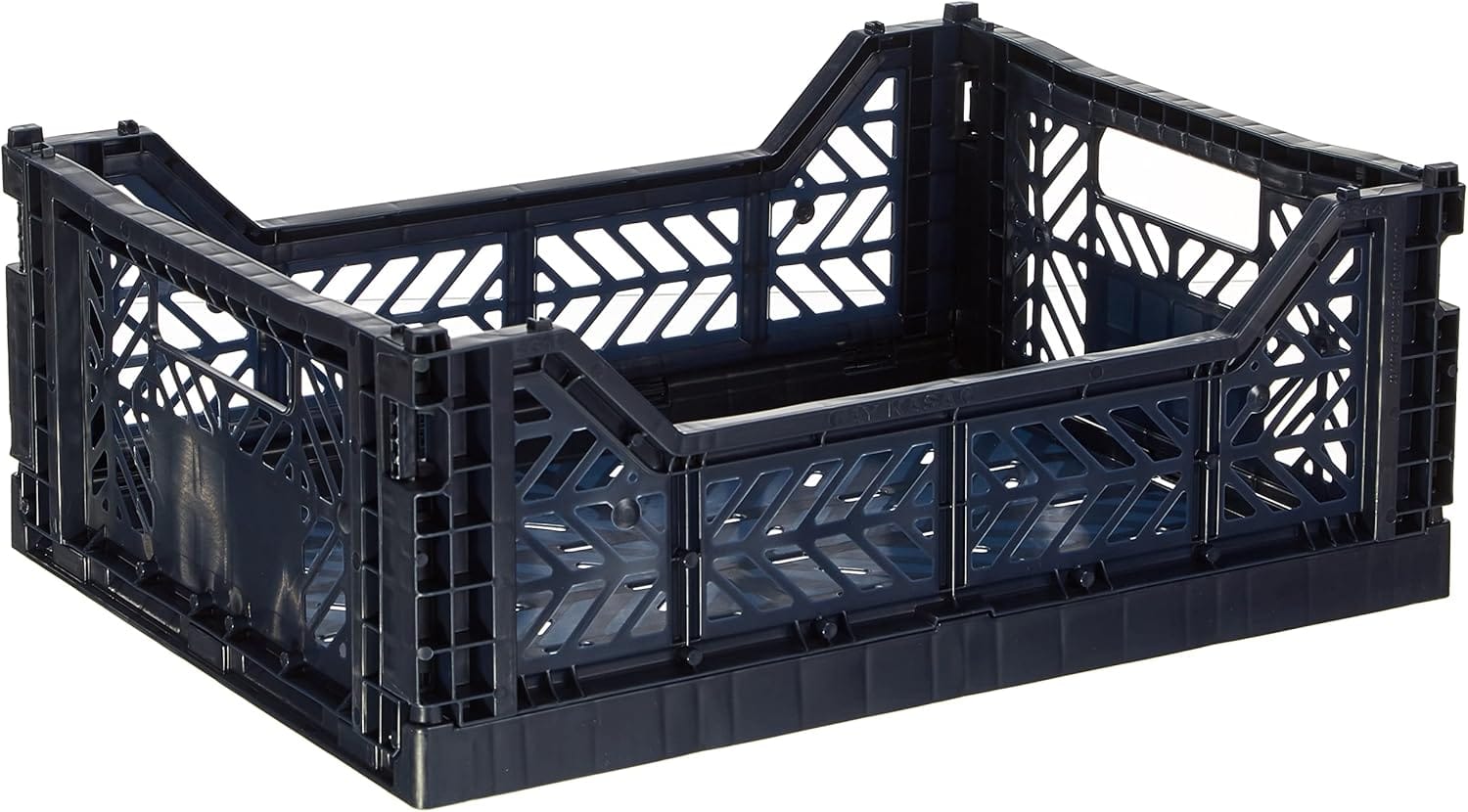
HAY Colour Crate M — Navy (Mid-Range)
The M-size in navy is the single most versatile object in HAY’s lineup: foldable, stackable, and available in a color that stops being storage the moment it sits next to a linen sofa.
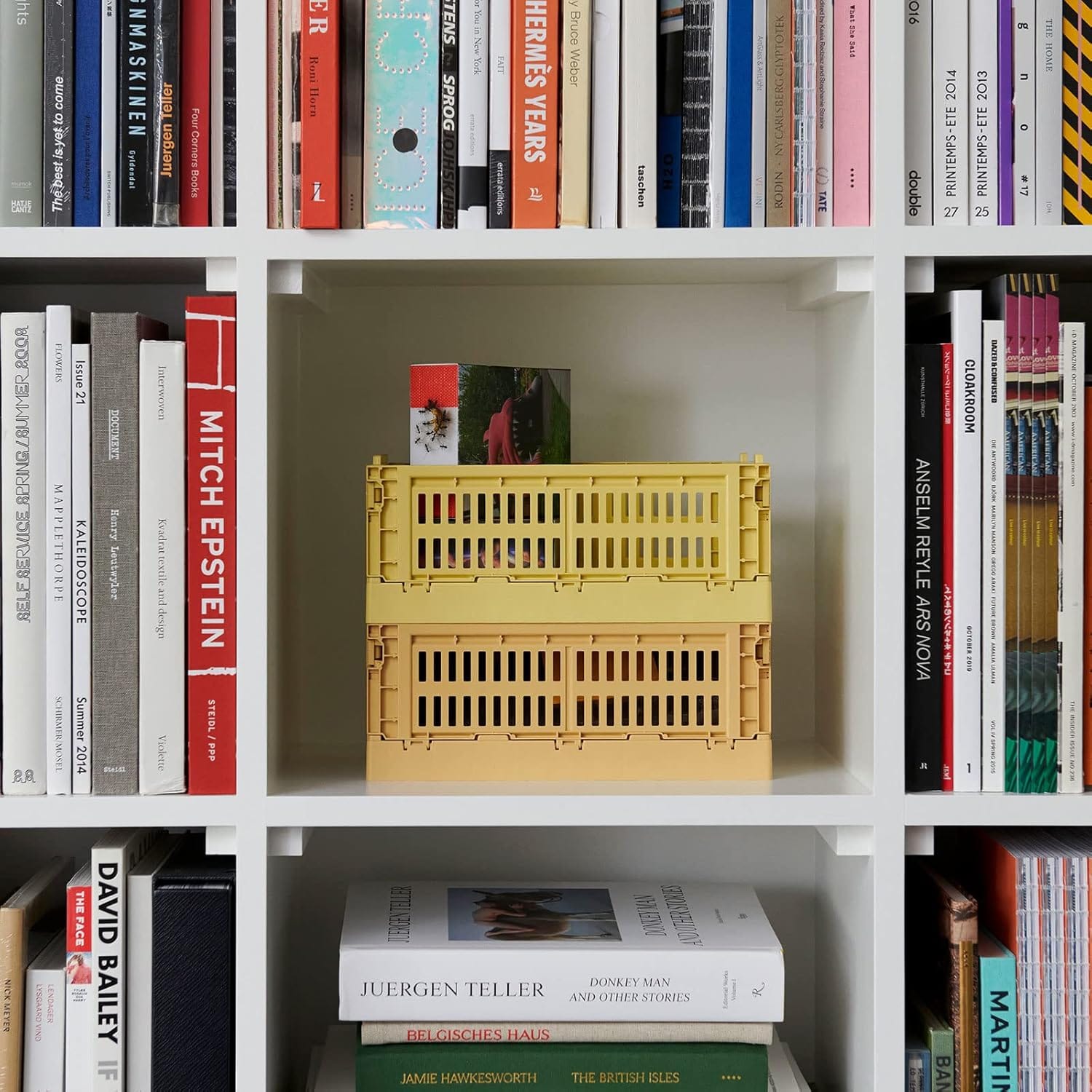
HAY Colour Crate S — Dark Mint (Recycled) (Mid-Range)
The S pairs directly with the M; stack them or line them on a shelf, and the dark mint against navy demonstrates HAY’s color-pairing logic without requiring any other furniture.
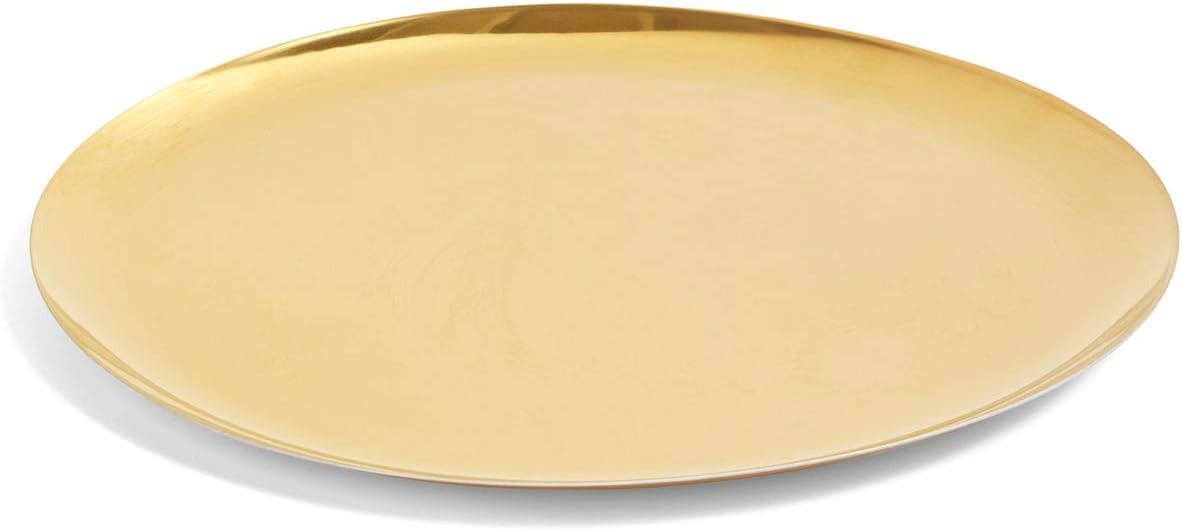
HAY Serving Tray XL — Gold Steel (Mid-Range)
At Ø 35cm, this powder-coated steel tray is large enough to organize a coffee table or sideboard. It zones the surface and gives the eye somewhere to land.
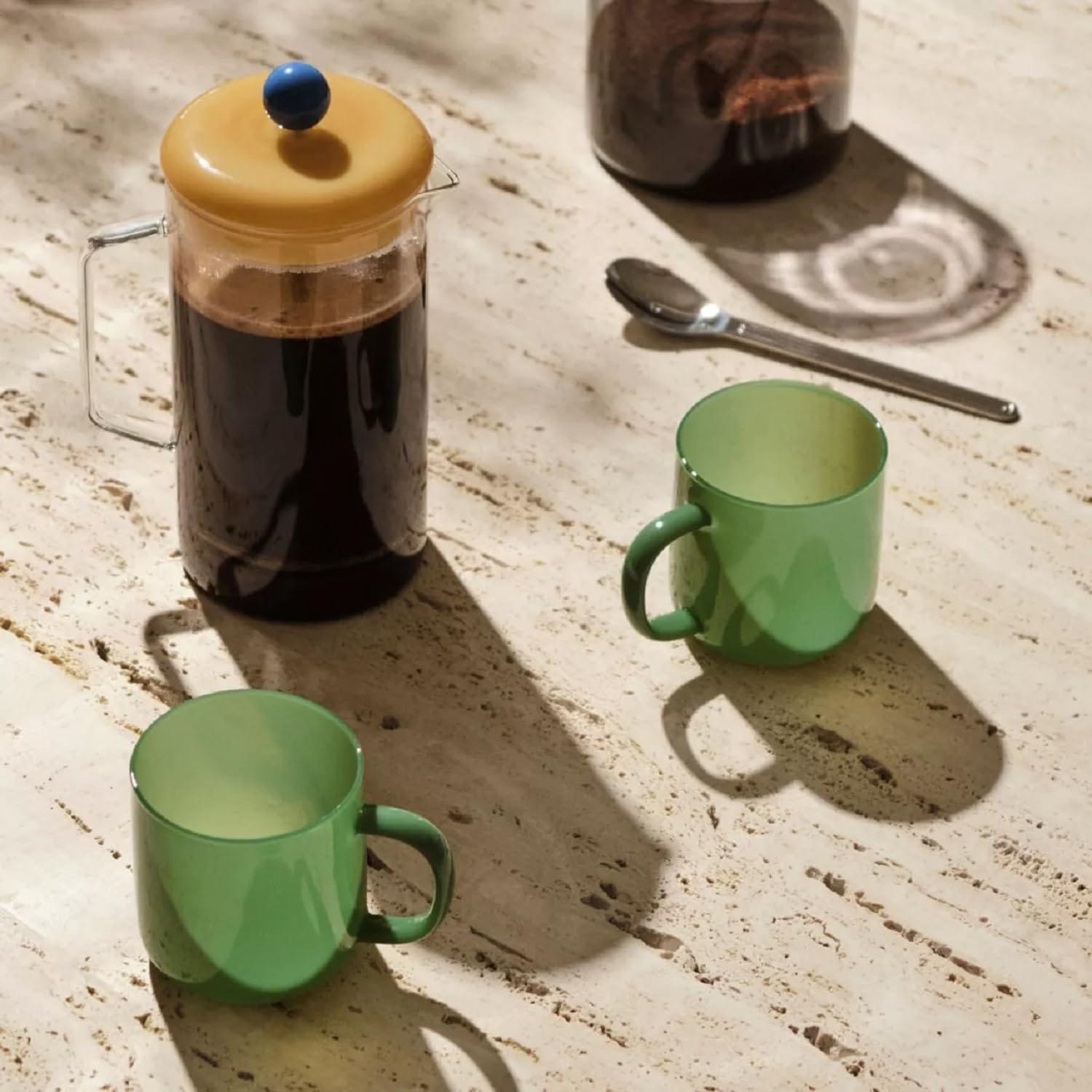
HAY Borosilicate Mug Set of 2 — Jade Green (Budget)
The most accessible HAY entry point on Amazon: under $35 for a set of two, and the jade sits cleanly against white walls or open wood shelving.
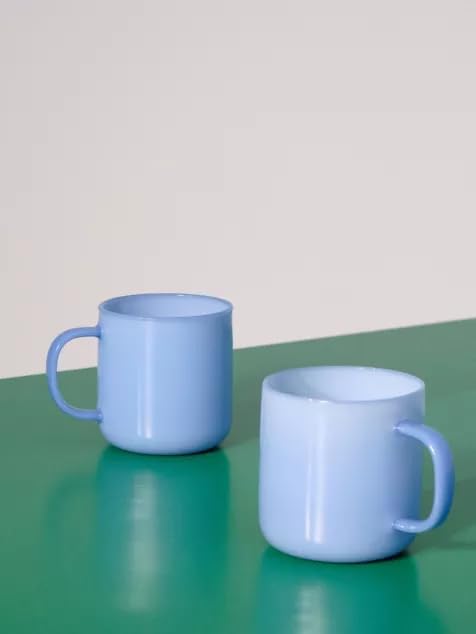
HAY Borosilicate Mug Set of 2 — Light Blue (Budget)
The light blue variant alongside jade demonstrates HAY’s palette logic on a shelf: different hues, identical form, the system visible at a glance.
Quick Decision Guide
- Best overall: HAY Colour Crate M (Navy) — the single object most likely to read as HAY in a room; foldable when empty, stackable with the S-size, and available in ~12 colors.
- Best for a flat surface: HAY Serving Tray XL — Gold Steel: is a tray, a catch-all, and a sculptural object; the Ø 35cm diameter makes it genuinely useful rather than decorative.
- Best entry price: HAY Borosilicate Mug Set — Jade Green: under $35, demonstrates the palette system without committing to furniture; works on an open shelf or kitchen counter where visibility is the point.
- Best for color-pairing: buy the Colour Crate M in Navy and the Crate S in Dark Mint together. Stacked, they show how HAY uses color as structure, not accent. The two-size system is the argument.
Full Comparison
| Product | Best For | Price Range | Key Feature | Link |
|---|---|---|---|---|
| Colour Crate M — Navy | Entryway / storage / shelf anchor | Mid-Range | Foldable, 100% recycled PP, stackable | Buy |
| Colour Crate S — Dark Mint | Desktop / compact shelf | Mid-Range | Compact, same palette system, pairs with M | Buy |
| Serving Tray XL — Gold | Coffee table / sideboard | Mid-Range | Powder-coated steel, Ø 35cm, durable | Buy |
| Borosilicate Mug Set — Jade | Kitchen / open shelf | Budget | Heat-resistant glass, set of 2, palette color | Buy |
| Borosilicate Mug Set — Light Blue | Color pairing / shelf display | Budget | Same form, alternate palette, low commitment | Buy |
How to Decorate with HAY Furniture: What Each Object Does in a Room
HAY Colour Crate M — Navy
Pros:
- Foldable when empty: flat storage between uses, no wasted space
- Stackable with other Crate sizes; the M + S combination is a system, not just two objects
- Made from 100% recycled post-consumer polypropylene, HAY’s current sustainability standard
- Available in approximately twelve colors, so the navy is a choice, not a default
- Works simultaneously as storage, display, and styling object; it does not need to declare which one it is
Cons:
- Polypropylene shows fine scratches over time, particularly in darker colors
- Not a primary furniture piece. The Crate organizes a room; it does not anchor one.
Who it’s for: Anyone furnishing an entryway, home office shelf, or kitchen counter who wants a visible, design-forward storage solution under $50.
Why it stands out: The Crate’s color is structural. Navy next to a linen sofa reads as a design decision, not a household supply. That is the HAY argument in a single object.
Navy next to a linen sofa reads as a design decision, not a household supply. That is the HAY argument in a single object.
HAY Colour Crate S — Dark Mint (Recycled Polypropylene)
Pros:
- Compact footprint makes it right for a desk or narrow shelf
- Same recycled PP construction as the M, HAY’s sustainability upgrade across the Crate line
- Dark mint against navy produces a color pairing that holds at a distance; it reads across a room
Cons:
- Smaller capacity limits what it can actually store; this is more a display object than a workhorse
- Color availability in the recycled PP variant is narrower than the standard PP line
Who it’s for: Buyers who already have the M and want to complete the two-size system, or anyone who needs a compact, color-forward shelf object without the M’s footprint.
Why it stands out: Stacked with the M in a contrasting color, the S makes the system argument visible. This is HAY’s palette logic expressed as two objects, not one.
HAY Serving Tray XL — Gold Steel
Pros:
- Powder-coated steel is durable and cleanable. This is not a decorative tray that lives in a cabinet.
- Ø 35cm is genuinely large; it holds a candle, a small plant, and two objects without looking crowded
- Gold finish works against both warm wood tones and pale walls; it does not require a specific palette to read correctly
Cons:
- Steel is heavy; this is not a tray you carry frequently
- Not dishwasher safe, hand wash only
- One colorway per purchase; if the gold does not work in your room, the silver variant requires a separate order
Who it’s for: Readers who want a single object to finish a coffee table or sideboard without replacing any furniture.
Why it stands out: A tray this size becomes a surface within a surface. It zones a flat plane and gives the eye somewhere to land without requiring any additional styling.
HAY Borosilicate Mug Set — Jade Green
Pros:
- Borosilicate glass is heat-resistant, lightweight, and visually clear; the glass does not fight the color
- Sold as a set of two: useful for a household, functional for a shelf display
- Jade green is distinct enough to read as a color choice, not just ‘green’
Cons:
- Glass chips at the rim with heavy daily use; this is not a camping mug
- Clear glass shows tea and coffee staining over time; requires regular cleaning if it lives on an open shelf
Who it’s for: An accessible first HAY purchase, and a useful styling prop for an open kitchen shelf or counter where visibility is part of the point.
At $25–35, the Borosilicate Mug set is the most direct way to put HAY into a room — the palette logic at the lowest possible commitment.
Why it stands out: At $25–35, it is the most direct way to put HAY into a room. The jade color demonstrates the palette-as-system logic at the lowest possible commitment.
HAY Borosilicate Mug Set — Light Blue
Pros:
- Light blue reads as a distinct hue from jade; on a shelf together, the two sets demonstrate range without contradiction
- Same 300ml borosilicate form as the jade variant; the system is visible in the identical shape
Cons:
- Same chipping and staining limitations as the jade set
- Light blue is quieter than jade; on its own, without the pairing context, it is less legible as a design choice
Who it’s for: Buyers who have the jade set and want to make the palette argument on a shelf, or anyone who prefers a cooler, quieter HAY entry point.
Why it stands out: The value of this set is in combination with the jade. Two identical forms, two different colors: that is how HAY’s system operates.
HAY Objects Make an Argument About Color, Not Storage
HAY’s founding argument, stated by Mette and Rolf Hay when they launched the brand in Copenhagen in 2002, was specific: bring Danish furniture design back to the quality and ambition of the 1950s and 1960s, but at contemporary price points. Not museum pieces. Objects for rooms people actually live in.
The brand’s collaboration model supports that argument directly. Ronan and Erwan Bouroullec designed the Palissade outdoor steel series, sold at the MoMA design store. Scholten & Baijings, Inga Sempé, and Hee Welling have contributed to the catalog. These are serious designers with serious institutional credentials, not in-house stylists.
HAY has been majority-owned by Herman Miller (MillerKnoll) since 2019, and the 2017 YPPERLIG collaboration with IKEA — over 60 products — proved the brand’s design language scales to any price point.
The Colour Crate is not a storage statement. It is a color statement. At $35, it delivers the same visual argument as a Bouroullec Palissade chair in a garden: color as structure, not accent, not accessory. That is what you are buying.
For more HAY products in context, see the Scandinavian design products guide, the cluster hub for Scandinavian design product guides on this site.
Frequently Asked Questions
What is HAY furniture and where is it made?
HAY is a Danish design brand founded in 2002 in Copenhagen by Mette and Rolf Hay. The brand produces furniture, textiles, and accessories designed around bold color and clean geometry. HAY manufactures across multiple countries depending on the product category; the brand’s headquarters remain in Copenhagen. In 2019, Herman Miller (now MillerKnoll) acquired a majority stake, making HAY part of the MillerKnoll family.
How do I style HAY Colour Crates in a living room?
Place a Colour Crate M on the floor beside a sofa or chair as a low side table or reading stack. Stack an S-size on top of the M in a contrasting color; the two-size combination makes the color logic visible. Dark mint against navy, or yellow against red, are HAY’s own pairing suggestions. The crate reads as a design object when it sits in open view; putting it in a cabinet defeats the purpose.
Is HAY furniture available on Amazon?
Yes. HAY sells a selection of accessories, storage, and tableware through Amazon, including the Colour Crate, Serving Tray XL, and Borosilicate Mug sets. The full furniture catalog, including sofas, chairs, and tables, is available through HAY’s own website and authorized retailers, but the Amazon selection covers the most accessible entry-point objects.
How does HAY furniture compare to IKEA?
HAY and IKEA are not the same category. HAY’s price points are higher, its color execution is more considered, and its designer collaboration model produces objects that carry institutional design credentials. The 2017 YPPERLIG IKEA collaboration produced over 60 products and demonstrated that HAY’s design language can operate at IKEA scale. The mainline HAY catalog is built for readers who want the design argument, not just the aesthetic.
Can you mix HAY pieces with other Scandinavian brands?
Yes, with one condition: color. HAY’s palette is specific; the navy, the dark mint, the mustard yellow are HAY colors, not generic Scandinavian neutrals. If you are mixing HAY with Muji (mostly neutral) or Marimekko (pattern-heavy), the HAY piece will either anchor the palette or fight it. Use HAY color objects as the dominant note and let the other brands support.
Why does HAY furniture cost more than IKEA but less than Vitra?
HAY sits in the middle tier of the Scandinavian design market by design. Mette and Rolf Hay built the brand to deliver 1950s Danish furniture quality at accessible contemporary prices: better than mass-market, not priced for institutions. Vitra makes museum-grade reproductions and licensed originals; the price reflects rights and materials. HAY makes new work at production scale. The Colour Crate at $35 is not a compromise version of the idea. It is the idea.
What to Buy First if You Are New to HAY
HAY’s strongest objects on Amazon are the ones that carry the color-system argument at the lowest commitment. These five are worth owning together or individually.
- HAY Colour Crate M — Navy: The M-size crate in navy is HAY’s most versatile storage object: foldable, stackable, and available in a color that reads as a design decision rather than a household supply.
- HAY Colour Crate S — Dark Mint (Recycled): The S-size pairs directly with the M. Stack them or line them on a shelf; the dark mint against navy demonstrates HAY’s color-pairing logic without needing any other furniture.
- HAY Serving Tray XL — Gold Steel: At Ø 35cm, this tray is large enough to organize a coffee table without turning it into a display surface. It zones the space while being a proper object in its own right.
- HAY Borosilicate Mug Set of 2 — Jade Green: The most accessible HAY entry point on Amazon: under $35 for a set of two, and the jade color sits cleanly against white walls or open wood shelving.
- HAY Borosilicate Mug Set of 2 — Light Blue: The light blue variant alongside the jade set demonstrates HAY’s palette logic on a shelf: different hues, identical form, system visible at a glance.
Further Reading
Two books worth owning if you want the design lineage that makes HAY’s palette choices legible: not just the brand, but the tradition it is arguing for.
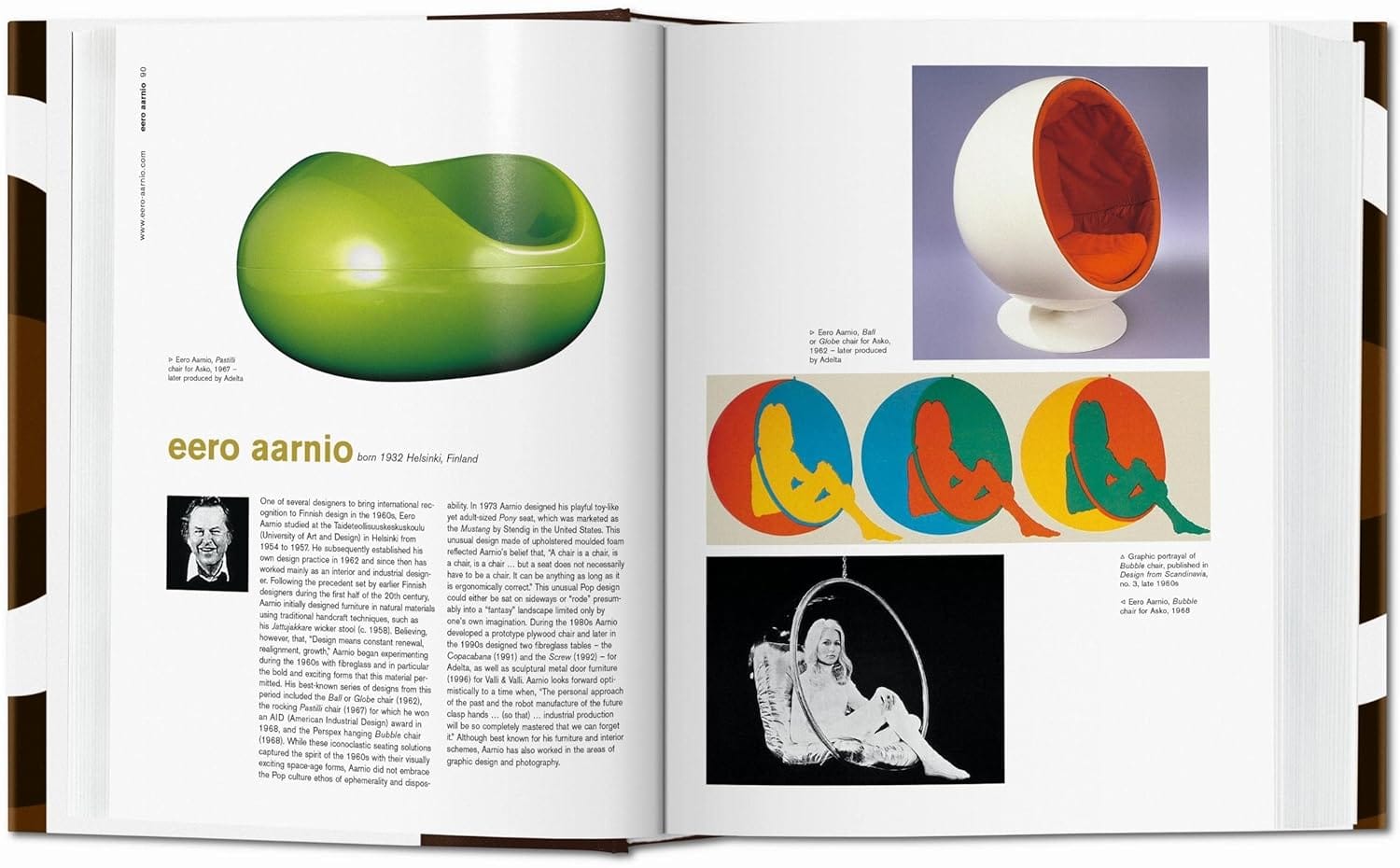
Charlotte & Peter Fiell, Scandinavian Design (Taschen, Bibliotheca Universalis, 2013)
The Fiell survey covers 180+ designers and companies across all five Nordic countries. HAY sits within this tradition, and the book gives readers the design lineage that makes the brand’s palette choices legible across a century of Scandinavian work.
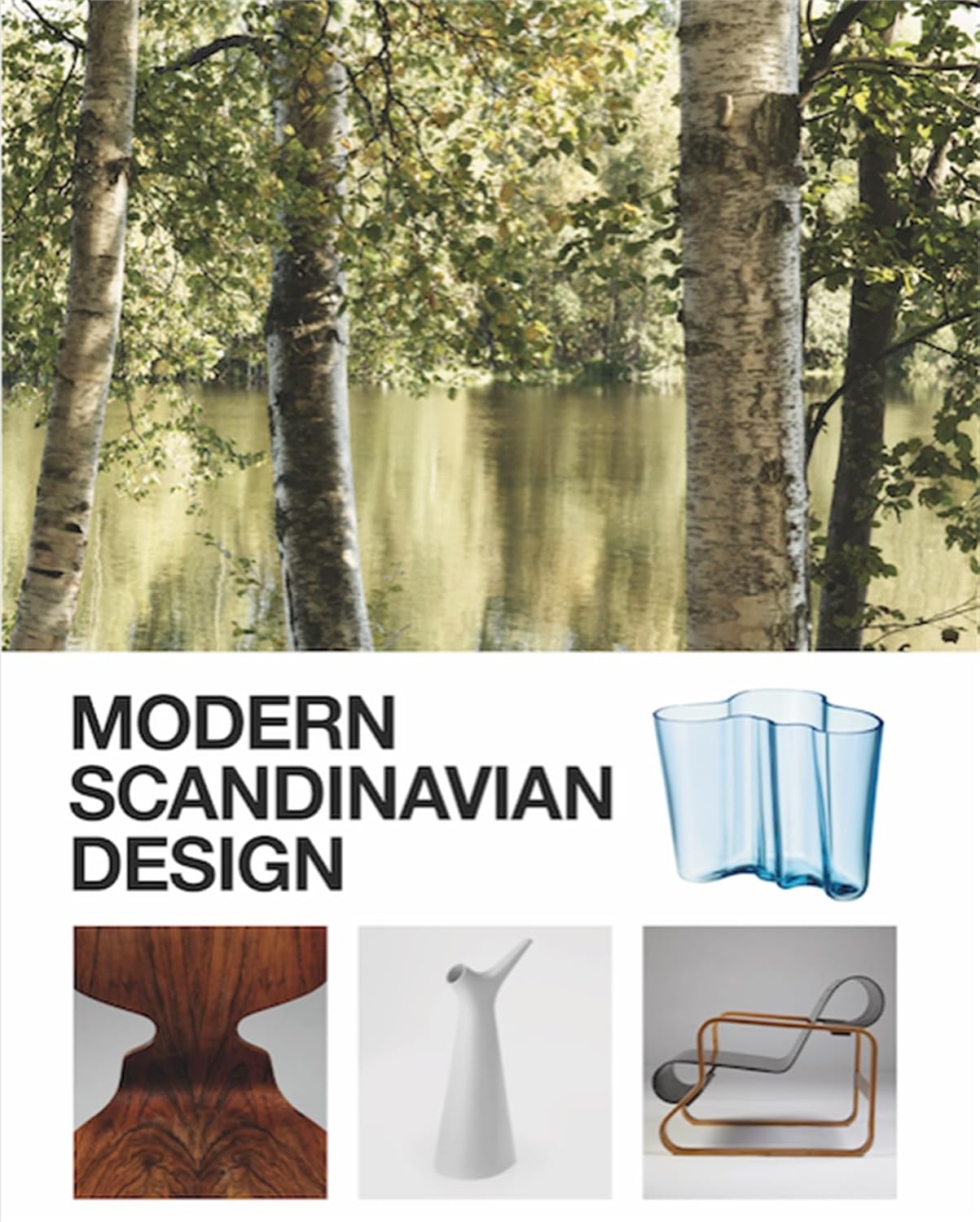
Charlotte & Peter Fiell, Modern Scandinavian Design (Laurence King, 2017)
More focused than the Bibliotheca Universalis edition; concentrates on post-1925 Scandinavian work and includes the generation of Danish furniture designers HAY explicitly references as its founding argument.
For specific product picks across the HAY range, see our guide to best HAY products.

About Zoe Post
Zoe Post holds a BFA and a Master of Architecture from the School of the Art Institute of Chicago. She now works as a product marketing leader at an architectural product design firm, bringing hands-on industry perspective to everything she writes. At ADI she covers contemporary artists, textile and pattern design, and the design objects that sit at the boundary of art and function.