
Fritz Hansen is a Danish furniture manufacturer founded in 1872 that makes pieces designed by outside architects rather than an in-house studio. Fritz Hansen chairs include Arne Jacobsen’s Ant (1952), Series 7 (1955), Egg and Swan (1958), plus Poul Kjaerholm’s steel collection, produced since 1982.
Why a cabinetmaker’s parts shop started taking orders from architects
Fritz Hansen began as a maker of furniture parts rather than as a named design studio. In 1872, a cabinetmaker named Fritz Hansen opened a workshop in Copenhagen, and he made small furniture parts. That was a supplier’s trade, not an author’s, and Wikipedia’s company-history entry records it plainly. So the chairs his shop built in its first decades borrowed eighteenth century English forms: curved legs, curlicue splats, copied from Chippendale. What the surviving record shows is a shop selling capability rather than a point of view. Instead of a house style, it had the ability to make furniture well.
The 1905 commission that set the pattern
The turn came from outside the workshop. Trade records at 1stDibs place the firm’s first architect commission in 1905. Martin Nyrop had designed Copenhagen City Hall down to its fixtures, so he asked Fritz Hansen to build the furniture for it. That arrangement set the pattern the firm would run on for the next century. An architect designs the whole environment, and Fritz Hansen builds the part you sit in. Then, in 1915, by the same accounts, Fritz Hansen became the first Danish firm to make chairs from steam bent wood. That is a technical skill, not a house look. So what the firm was building up was range, not a signature.
That range is what made Fritz Hansen useful to Arne Jacobsen. The two began working together from the 1930s, though sources disagree on the exact year. Wikipedia dates the relationship to 1934, but the work is recorded at least as early as Jacobsen’s Bellevue and Bellavista project at Klampenborg, north of Copenhagen. Still, the Jacobsen partnership did not turn Fritz Hansen into an architecture firm with a factory attached. Instead, it turned the firm into something closer to a publisher: an operation that takes on other people’s ideas and backs the ones worth making. That is also what manufacturers that decide what gets made do across Danish design more broadly.
A publisher does not write the books it prints. Instead, it decides which manuscripts are worth the paper, and its name rests on whether that judgment holds up over time. Fritz Hansen is the Danish half of the Scandinavian story in exactly this sense. In fact, the furniture trade there ran as much through makers’ choices as through individual designers’ talent.
Fritz Hansen doesn’t write the books on its list. It decides which ones are worth setting in type.
What Fritz Hansen chairs carry that their reproductions don’t
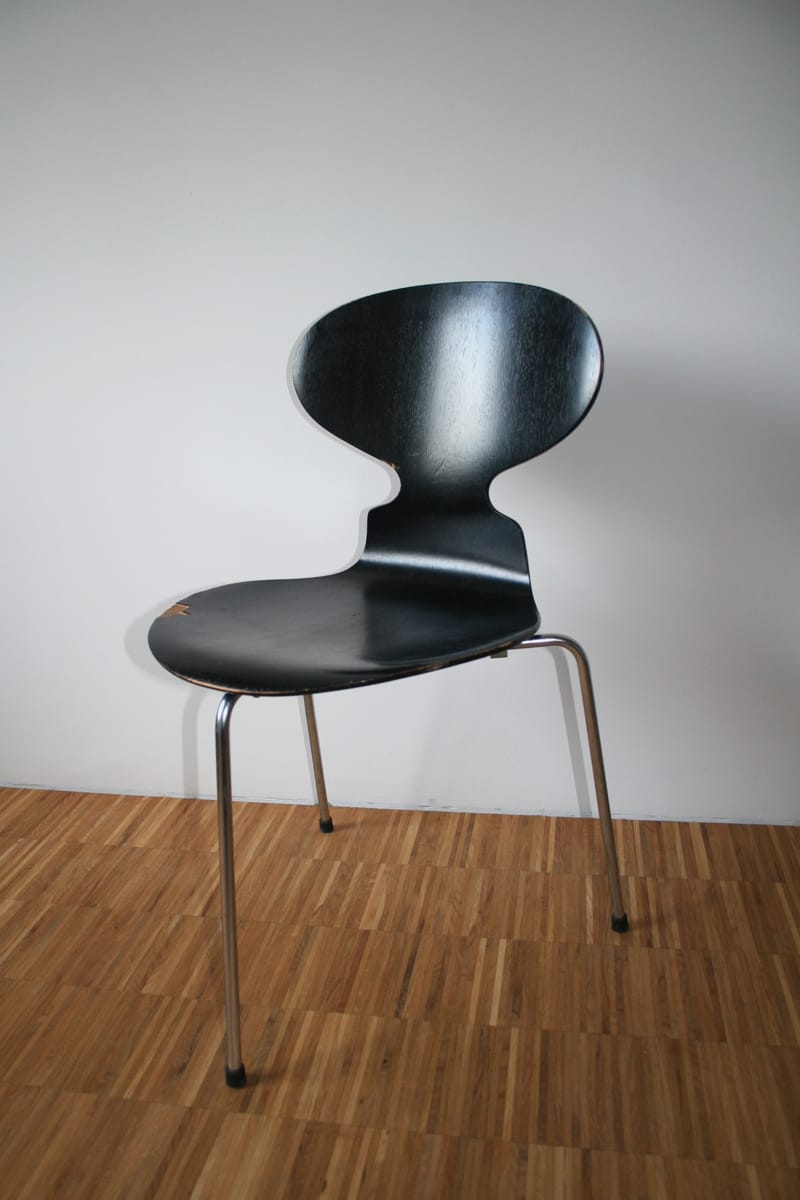
The Ant is the hinge of this argument. The firm’s own history with it cuts against a tidy discovery story. Arne Jacobsen designed the Ant, model 3100, in 1952, for the staff canteen at Novo Industri, the drug firm now called Novo Nordisk. Still, Fritz Hansen was reluctant to produce it, and the chair went into production only after a Novo director ordered three hundred units. So a purchase order, not a flash of inspiration, is what got the firm’s most important chair off the drawing board.
The company didn’t believe in its own most famous chair until a pharmaceutical firm ordered three hundred of them.
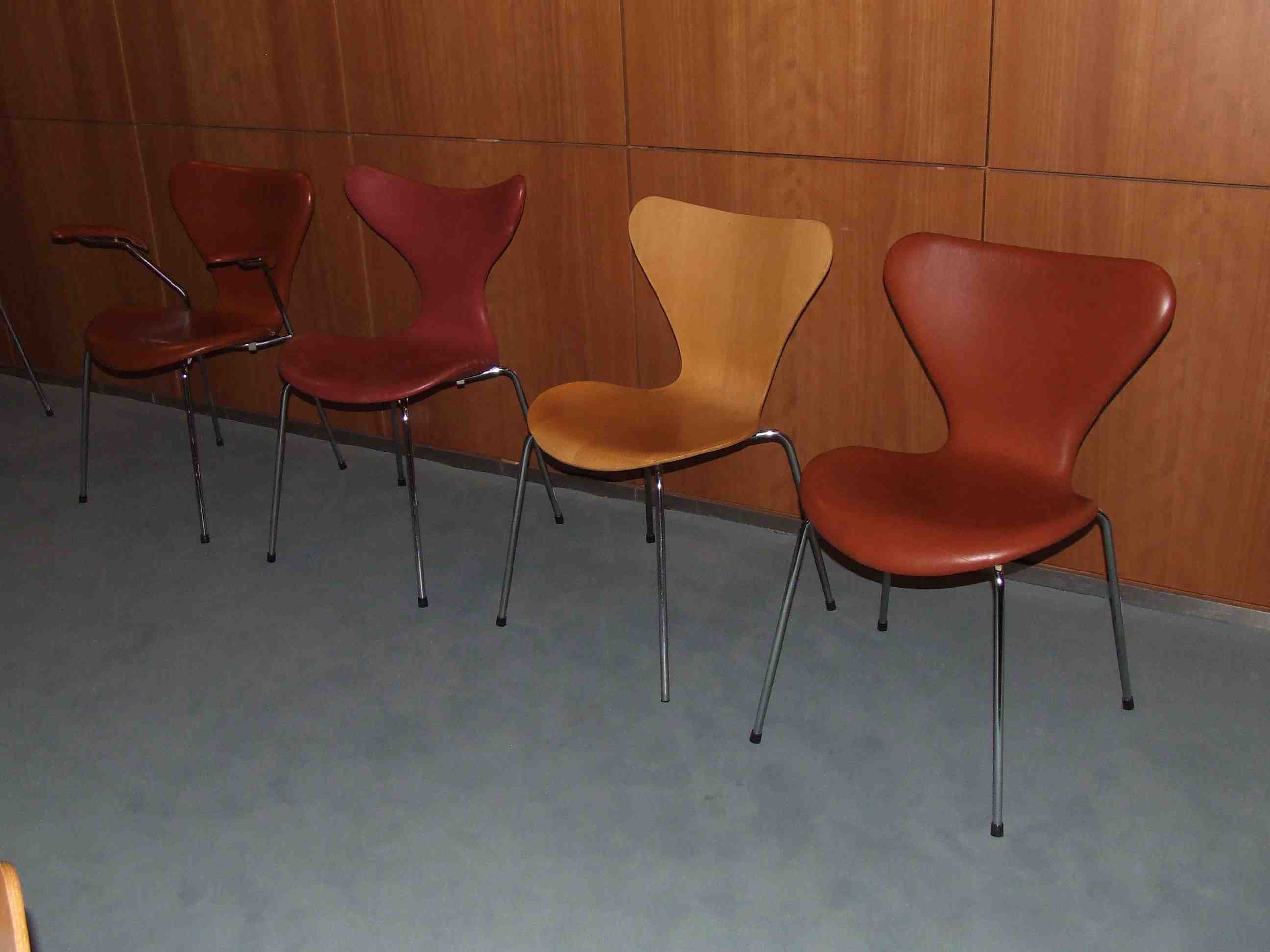
What Fritz Hansen brought once it agreed to build the Ant was its moulding process. Nine veneer layers, pressure moulded into one continuous shell, set on three legs. Then, three years later, the Series 7, model 3107, widened that same shell into shoulders and set it on four legs. It became the best selling design in the firm’s history. Trade sources at Danish Design Store put lifetime sales above five million units. Still, that figure is worth citing as a trade claim, not repeated here as verified fact.
Isn’t the difference just licensing?
Here is the honest version of the argument about copies, and it deserves a real objection before it gets a defense. A skeptic could reasonably make a different claim. The real difference between an authentic Fritz Hansen chair and a copy is not some rare trade secret. Instead, it is trademark protection, design patent law, and the Fritz Hansen name on the invoice.
Pressure moulded plywood and foam sculpted forms are not secret technologies. Any well equipped furniture factory today can mould plywood or sculpt foam, and a manufacturer does not need Fritz Hansen’s original prototypes to reach comparable dimensions, materials, and ergonomics. Measure a Series 7 shell closely enough, and a competent factory can build something close to it. That is the strongest version of the objection, and it deserves stating plainly rather than waved off.
The objection gets the technology right. It still misses what a buyer of an authentic chair is actually purchasing, which is not a shape but a documented production record. Fritz Hansen can trace a Series 7 shell back to Jacobsen’s 1955 design and to the company’s own continuous manufacture of it since, sold through an authorized dealer network and stamped as its own. A reproduction, however close the measurements land, does not carry that record. It is a new object built to resemble an old one, not a documented link back to the commission that produced the original.
That distinction is provenance, not process. Licensing protects Fritz Hansen commercially. But the provenance argument holds on its own terms, separate from the legal one. For a buyer who values documented authorship, a chair with a traceable production history is a different kind of object from one that merely resembles it, however exact the resemblance. For a buyer weighing comfort and build quality against cost, it reasonably is not. A copy can match a silhouette. What it does not carry is Fritz Hansen’s own record of who made it, when, and under what name.
A copy can match a silhouette. What it doesn’t carry is Fritz Hansen’s own record of how it was made.
The Egg was designed the same way, in 1958. So Fritz Hansen made it for the lobby and lounge of the SAS Royal Hotel in Copenhagen. Jacobsen shaped its body in hard polyurethane foam rather than building it over a wood or steel frame. In fact, Dezeen called that, in an October 2024 piece on the chair’s history, an unusual process for its time. The Museum of Modern Art now holds the Egg Chair and Ottoman in its design collection, dated to that same 1958 debut. Jacobsen designed the entire hotel, down to the cutlery and the ashtrays. Still, the Egg and the rest of Jacobsen’s chairs for the SAS Royal Hotel outlived the interior they were built for.
Fritz Hansen’s judgment kept working after a designer’s death, too. Poul Kjaerholm built his steel frame collection with maker Ejvind Kold Christensen, from 1955 until Kjaerholm’s death in 1980. Then, in 1982, Fritz Hansen took over production and sales of the Kjaerholm Collection. That was a purchase, not a commission, so it shows the firm’s judgment extends to deciding which existing arguments are worth keeping in print.
The chairs that carry the argument
Ant, model 3100 (1952). Three legs, one pressure moulded plywood shell, priced to stack in a factory canteen. The Ant demonstrates that Fritz Hansen’s judgment was reactive, not far-sighted, no matter what company histories like to claim. In fact, it needed a three hundred unit order before it believed in the chair.
Series 7, model 3107 (1955). The Ant’s shell widened into shoulders and set on four legs. One continuous piece of moulded veneer, with no visible joint between seat and back. So this is the design that turned the moulding process from an experiment into a business.
Egg (1958). Designed with the Swan for the SAS Royal Hotel’s lobby and lounge. Jacobsen designed the whole building: the exterior, the interiors, the textiles, the lighting, the cutlery, and the ashtrays. Foam sculpted body, steel insert, four pronged aluminum swivel base. Still, the Egg is a total design commission that outlived the hotel interior it was made for.
Swan (1958). Same commission, same foam sculpting method, no straight lines and no visible seams. Where the Egg reads as a private hollow, the Swan reads as its public sibling. So it is lower and more sociable, built for a hotel lobby rather than a corner someone disappears into.
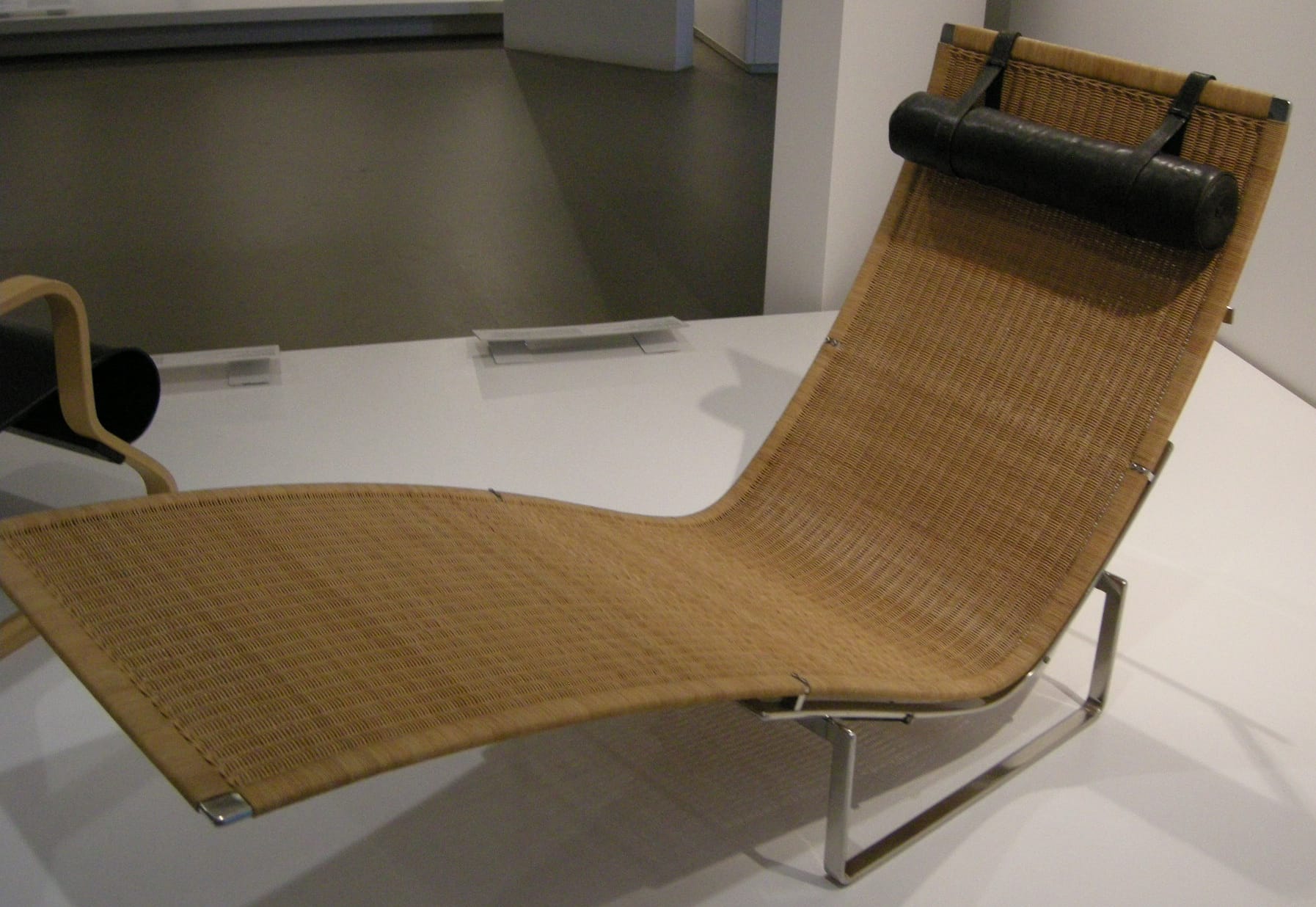
PK22 (Poul Kjaerholm, 1956; Fritz Hansen production since 1982). A matte steel frame with a wicker or leather sling. It won the Grand Prix at the 1957 Milan Triennale, under its original maker, E. Kold Christensen. So the PK22 belongs in this list to show what Fritz Hansen chose to keep alive, not just what it commissioned from scratch.
Shop the Collection
Stock check, 21 September 2026: nothing by Fritz Hansen is buyable on Amazon.com today. The miniature Egg, the miniature Series 7 and the Ant chair listings this page was built around are all “Currently unavailable”, and an Amazon search for the Egg chair returns wicker patio chairs, not Jacobsen. Fritz Hansen sells through its own site, Design Within Reach and 2Modern in the US. The three books below are in stock and are, for most readers, the right first purchase anyway.
Further Reading
Three books here do three different jobs, picked for primary source, architectural context, and economic context rather than for reputation. First, one is the firm’s own account of itself. Then, one treats the furniture as inseparable from the buildings it was made for. Finally, one refuses to treat Fritz Hansen as self-explaining.
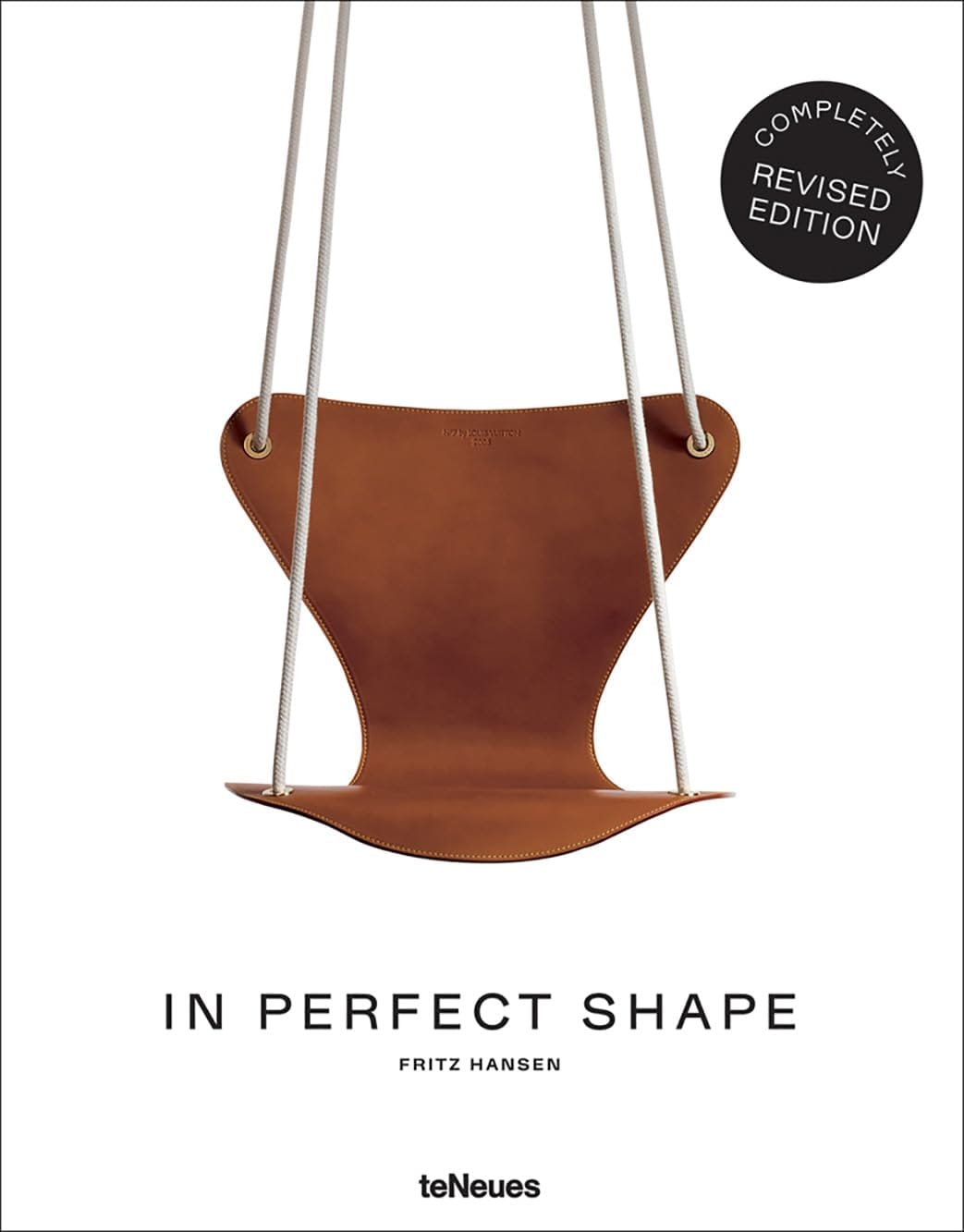
Fritz Hansen, In Perfect Shape (teNeues, 2022)
Is the firm’s own 150th anniversary volume. So read it as a primary source on how Fritz Hansen wants its history told, not as a neutral account of it.
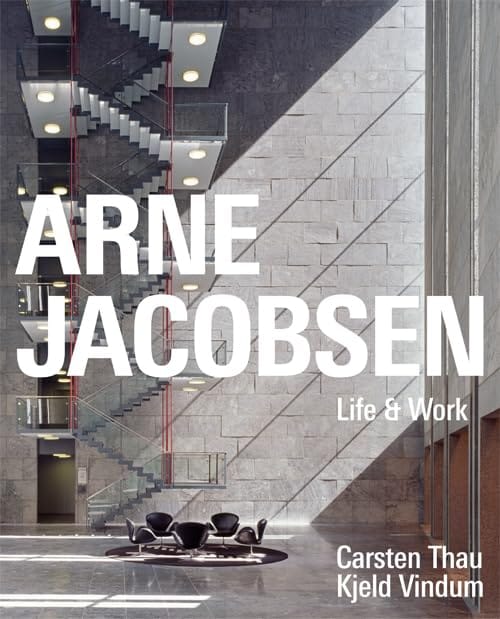
Carsten Thau and Kjeld Vindum, Arne Jacobsen: Life & Work (Danish Architectural Press)
Is the monograph on Jacobsen. It covers most of the firm’s canon, and it took a decade to complete. So it treats the furniture as part of the buildings rather than as standalone objects.
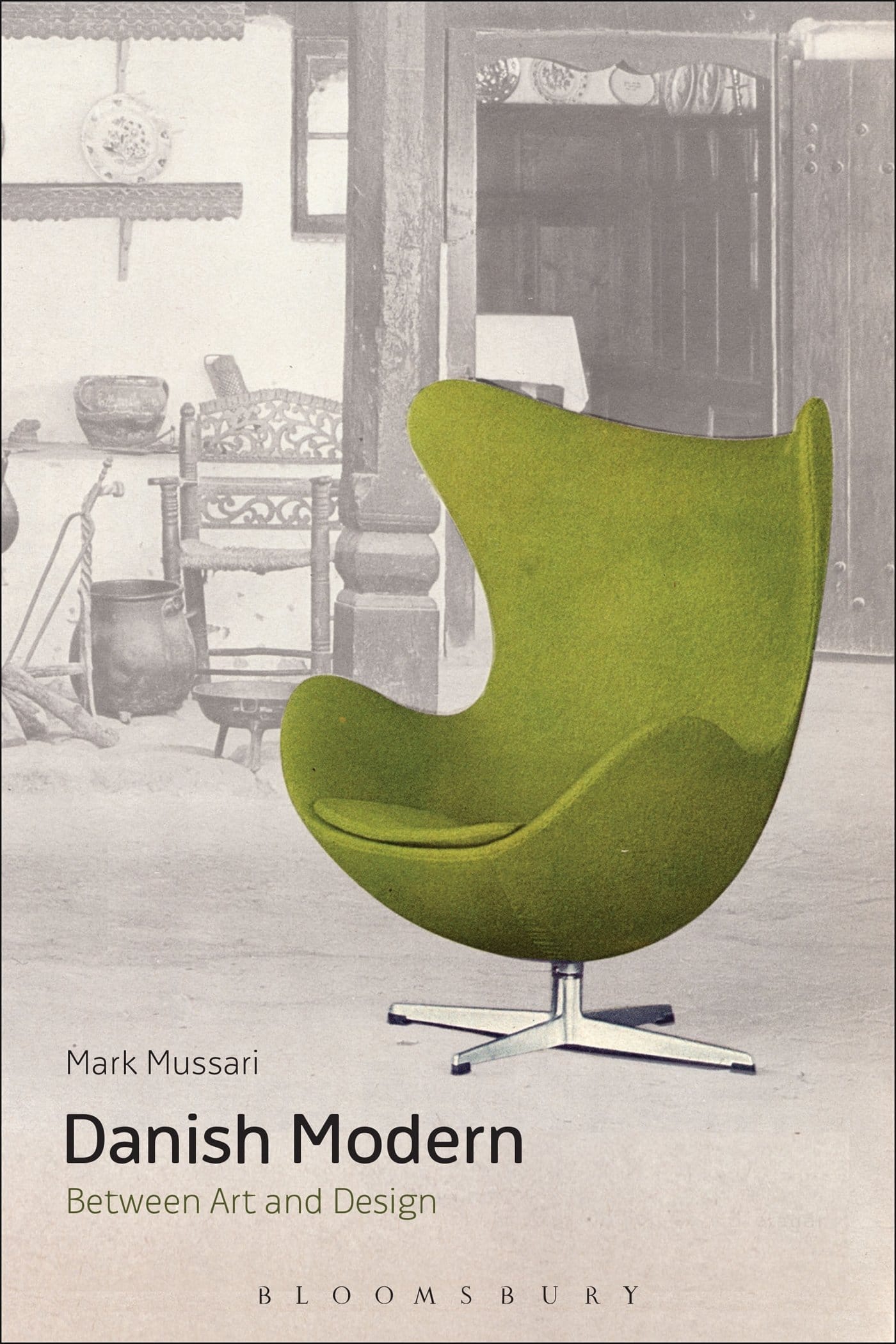
Mark Mussari, Danish Modern: Between Art and Design (Bloomsbury Visual Arts)
Places Fritz Hansen inside the wider Danish design economy. That economy ran from 1930 to 1960. So it treats the firm as part of a system, not as a story that explains itself.
Frequently Asked Questions
What is Fritz Hansen known for?
Fritz Hansen is a Danish furniture manufacturer, founded in 1872. It is known for producing Arne Jacobsen’s Ant, Series 7, Egg, and Swan chairs, plus Poul Kjaerholm’s steel frame collection. So the firm’s reputation rests less on a signature style than on judgment: which architects’ furniture arguments it decided were worth making.
Who designed the Fritz Hansen Egg chair?
Arne Jacobsen designed the Egg chair in 1958. He made it for the lobby and lounge of the SAS Royal Hotel in Copenhagen, a building he designed in full. Since its introduction, Fritz Hansen has made the Egg.
Are Fritz Hansen chairs worth the price?
The price buys the original moulding and upholstery process, an authorized dealer, and dated manufacture that Fritz Hansen can trace. That is not the same as a licence to a shape. A copy is not sold with Fritz Hansen’s authorized provenance or dealer support, so it carries no documented production record. But this article has no sourced figures on warranty terms, repair availability, or resale values. So the honest answer is narrower than the premium implies: it principally buys provenance and authorized distribution. A close copy can match the silhouette. Whether that record is worth the difference depends on what the buyer wants from the chair.
How can you tell if a Fritz Hansen chair is authentic?
Fritz Hansen sells only through its own official dealers. It also stamps or labels its production, so buying through that network is the reliable way to confirm authenticity. Listings described as ‘Arne Jacobsen style’ or ‘inspired by’ are not Fritz Hansen chairs, by definition, regardless of how closely they match the silhouette.
Where are Fritz Hansen chairs made?
Fritz Hansen is a Danish firm. Its corporate profile shows sales in more than 85 countries, through roughly 2,000 points of sale. Flagship stores and showrooms operate in cities including Copenhagen, New York, London, Seoul, Shanghai, Munich, and Tokyo. Still, the firm does not publish a country by country breakdown of where each product is made. So this article doesn’t assert a specific plant location beyond Denmark itself, which Fritz Hansen’s corporate profile confirms.

About Joe Post
Joe Post holds an MFA in Art from California Institute of the Arts (CalArts) and has done additional graduate work at the School of the Art Institute of Chicago. He founded Art Design Ideas to write about design as cultural argument — the decisions, contradictions, and assumptions built into the objects we live with.