
The Barcelona Chair vs Eames Lounge Chair is the definitive comparison in modernist lounge seating. The Barcelona (1929, Mies van der Rohe and Lilly Reich) and the Eames Lounge Chair (1956, Charles and Ray Eames) both cost roughly $5,500–$8,500 from licensed manufacturers Knoll and Herman Miller, representing opposing design arguments: European structural formalism versus American ergonomic humanism.
What each chair was actually arguing in its own era
The Barcelona Chair was not designed for sitting. That sounds wrong, but it’s the right place to start. Mies van der Rohe and Lilly Reich built it in 1929 for a single event: the reception of King Alfonso XIII and Queen Victoria Eugenia at the German Pavilion during the International Exposition in Barcelona. The Weimar Republic needed a throne. Not an actual throne, because that would have been too obvious, but something that read as authoritative, modern, and German. Mies and Reich delivered a chair that could hold royalty without borrowing the language of royalty. The form is all flat planes, crossed steel bars, and 40 individually hand-stitched leather squares. It looks monumental from across a room. That was the commission.
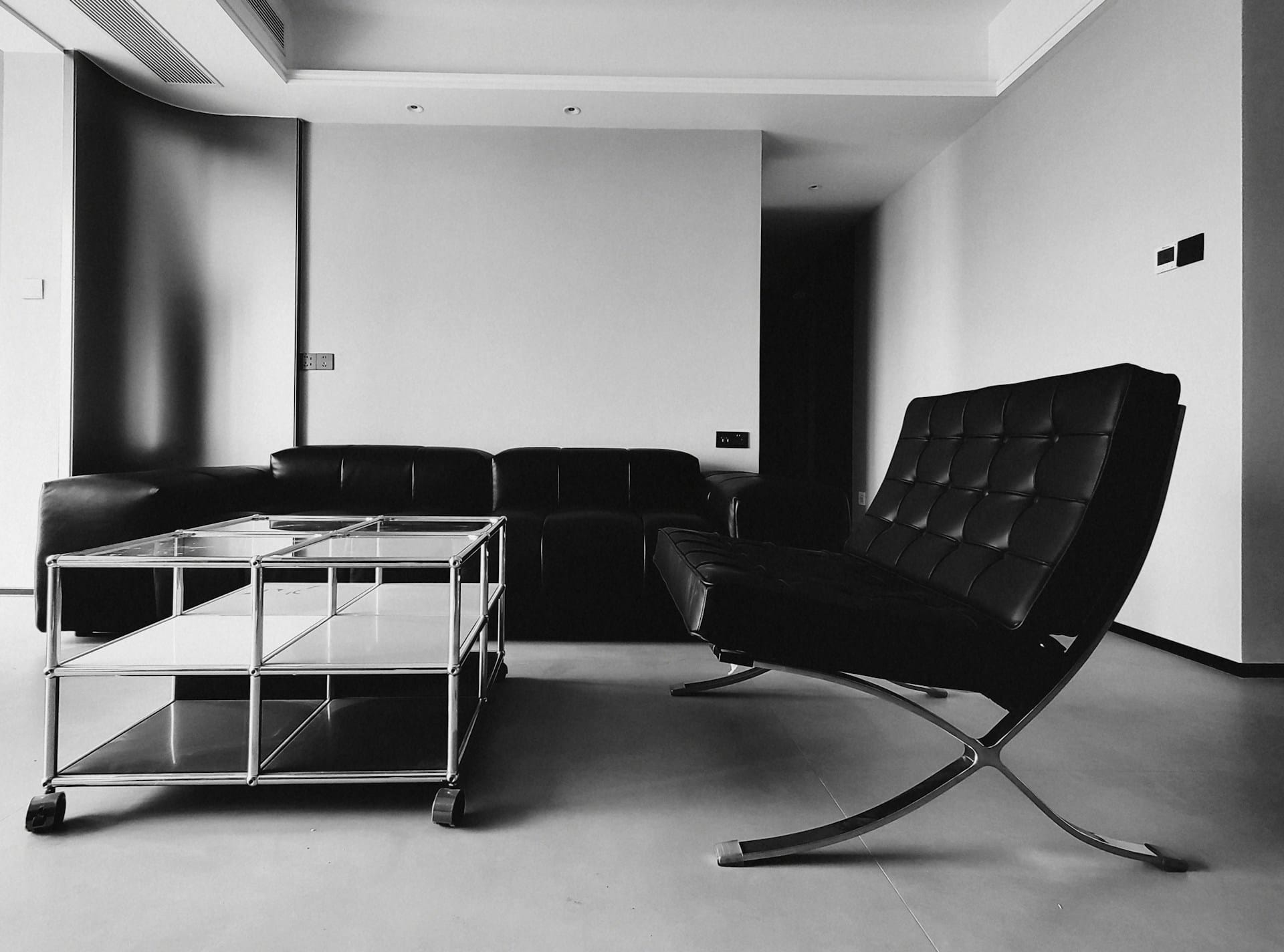
The Barcelona Chair was not designed for sitting. That sounds wrong, but it’s the right place to start.
The chair was called the MR90 until Knoll retroactively named it the “Barcelona Chair” in 1987. The building it was designed for was demolished in 1930, one year after the Exposition closed. The chair outlasted the room, which tells you something about the difference between furniture and architecture, and about what Mies understood of both.
Twenty-seven years later, in 1956, Charles and Ray Eames solved a completely different problem. Their friend and collaborator, the Hollywood director Billy Wilder, needed a chair for reading and napping. Not a chair for receiving heads of state. A chair for a private person’s working life. Charles Eames described the intended feel in his CBS television debut in January 1956: the “warm, receptive look of a well-used first baseman’s mitt.” The Eames Lounge Chair (Model 670) was the result. Three molded plywood shells in rosewood veneer, aniline leather cushions, a five-star aluminum base with a 15-degree recline. It looked exactly as informal as the Barcelona looked formal.
These origins matter because they never go away. One chair was conceived as a public statement for a nation-state; the other as a private object for a creative person’s home. You can still feel that when you sit in them.
Two different theories of what a luxury chair is for
The Barcelona Chair’s X-frame structure has a specific genealogy. The form derives from Roman curule chairs, the folding stools used by magistrates and members of the senatorial class. Mies was not working from nostalgia; he was making a direct historical claim. Modern design as the inheritor of classical authority. The frame is about legibility at a distance: the chair reads as a composition from across a room before it reads as something you sit in. This is furniture designed for architecture, not for bodies.
The construction reflects those priorities. Two flat chrome-plated steel bars per side cross in an X; the seat and back cushions float on leather straps attached to the frame. The 40 individual leather squares that make up each cushion panel take up to 28 hours to cut, stitch, and tuft per chair. Knoll has manufactured the licensed version since 1964; the original bolted construction was replaced in 1950 by a seamless stainless steel frame. Each frame carries a facsimile of Mies van der Rohe’s signature stamped into the steel.
The Eames chair took a different position. The three-shell molded plywood construction (headrest, backrest, seat) was the direct application of wartime research. During World War II, the Eameses developed bent plywood technology for the US Navy to produce leg splints. The process for shaping thin plywood under heat and pressure came straight out of that work. When the war ended, they applied the same method to furniture. The connection is material, not metaphorical. It is the same engineering, redirected from military medicine to domestic comfort.
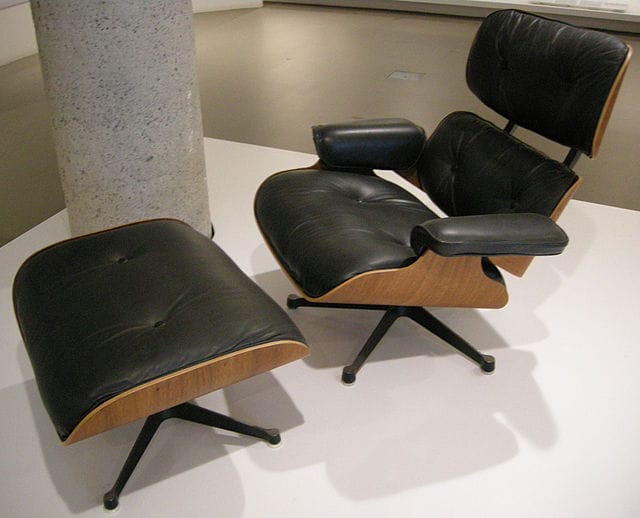
The original rosewood veneer gave the chair warmth that the Barcelona explicitly refuses. Brazilian rosewood was used until the early 1990s; since 2006, the 50th anniversary edition used sustainable palisander rosewood veneer. MoMA’s permanent collection holds a 1956 rosewood example, donated by Herman Miller in 1960.
Neither chair is comfortable for everyone, and this is worth naming plainly. The Barcelona is frequently described as a “half-hour chair” because its concave back stresses the lumbar spine during extended sitting (Ergoweb LLC, “Ergonomics an Afterthought for Lounge Chair Classics?”). The Eames chair has the opposite problem: taller users find the headrest misaligned, and elderly users report difficulty exiting the low, reclined seat. Both chairs were designed around an implied body type. Neither designer said so explicitly. But both forms are arguments about who the ideal user is.
Both forms are arguments about who the ideal user is. Neither designer said so explicitly.
Barcelona Chair vs Eames Lounge Chair: what each one feels like up close
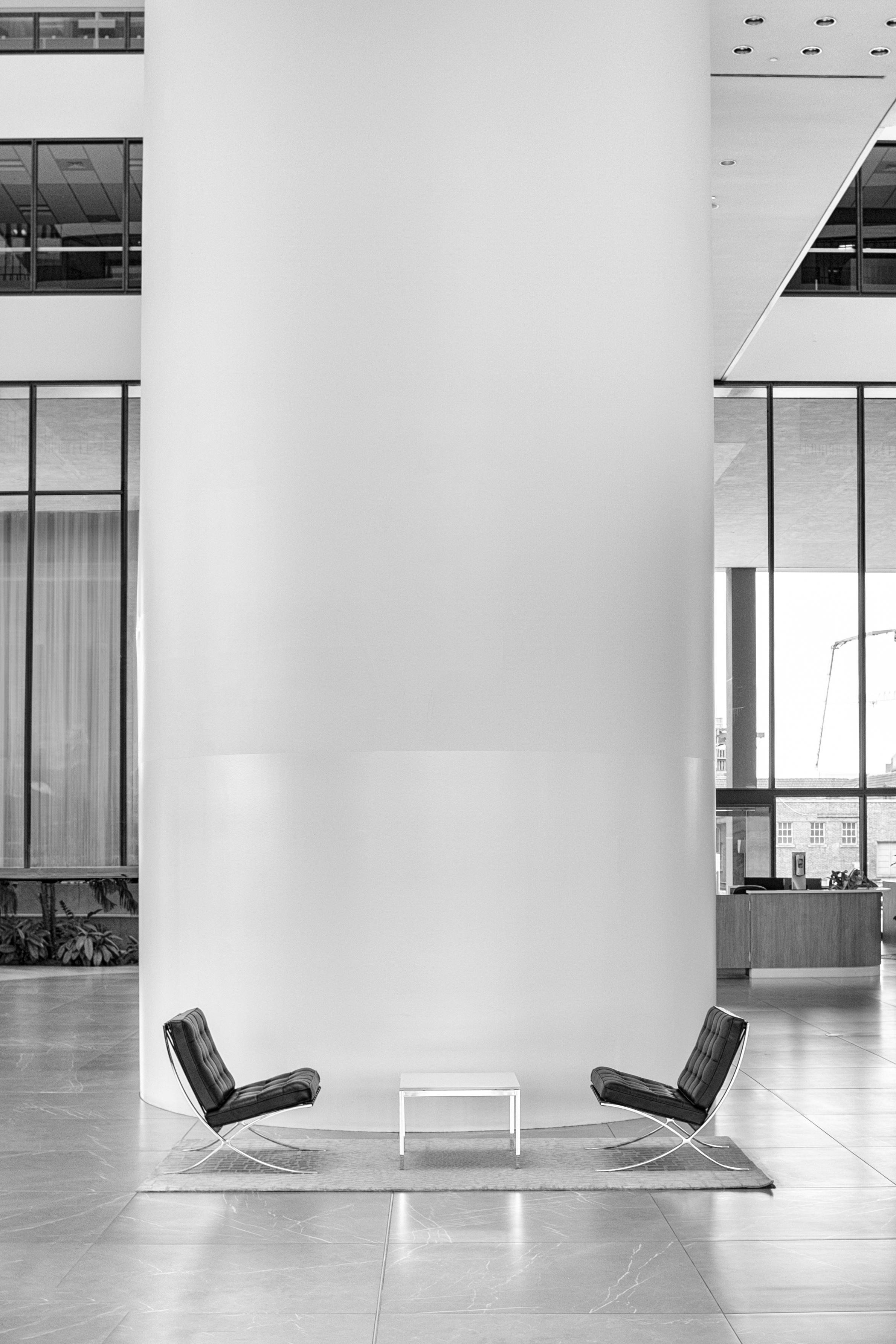
Barcelona Chair (MR90), 1929 — Ludwig Mies van der Rohe and Lilly Reich
Two crossing flat steel bars per side form a single planar X on each end. The seat and back cushions are divided into individual leather squares, each hand-cut and hand-stitched, tufted into a grid. There are no armrests. The silhouette is identical from 20 feet as from 2 inches, which is rare in furniture and essential to the chair’s logic: it was designed to be read across a room, not experienced from within. The Barcelona Ottoman (1929) mirrors the same frame and cushion construction in a lower block. In contract settings such as hotel lobbies, corporate reception areas, and museum entrance halls, the chair and ottoman rarely appear together. The ottoman was part of the original Pavilion composition; stripped of that context, it becomes optional.
Eames Lounge Chair (Model 670), 1956 — Charles and Ray Eames
Three curved plywood shells are covered in veneer and fitted with matching leather cushions: a headrest angled independently from the backrest, a backrest, and a seat. The shells connect to a five-star aluminum base through shock mounts that give the chair a slight give when you shift your weight. The recline angle is fixed at approximately 15 degrees. The chair has a high-backed envelope; it wraps around the body. You are inside it, not displayed by it.
The Eames Ottoman (Model 671) is a low footrest on a matching aluminum base. Charles and Ray designed the two as a single object. Herman Miller still sells them together. The 2024 Eames Lounge Chair in Luce, a fabric variant using Maharam’s Luce textile, demonstrates the ongoing licensed evolution of the design. Herman Miller still assembles the chair by hand in Zeeland, Michigan.
If you want to understand where the Eames Lounge Chair sits in design history, not just as an object but as a problem Eames was solving, Martin Eidelberg et al., The Eames Lounge Chair: An Icon of Modern Design (Merrell, 2006) is the specific text to read. It covers the development of the three-shell construction, Ray Eames’s role in the chair’s genesis, and its place in MoMA’s collection. For the Barcelona Chair’s design context, including Lilly Reich’s role and the German Pavilion commission, Franz Schulze and Edward Windhorst, Mies van der Rohe: A Critical Biography (University of Chicago Press, revised edition) is the archival source. And if neither icon has won you over yet, the ranked guide to the best designer lounge chairs covers the wider field, from the Egg to the budget alternatives.
Where to Buy the Originals
Both chairs are still made by the companies that hold the rights, and both are sold in the United States through Design Within Reach. ADI links only to licensed makers and their dealers. Prices were checked in September 2026.
- Knoll Barcelona Chair: $8,327 in leather, $5,550 in fabric.
- Herman Miller Eames Lounge Chair and Ottoman: $7,745, or $6,320 for the chair alone.
Both hold their value, so the secondhand market is the realistic route for most buyers: 1stDibs, Chairish, auction houses and estate sales all carry licensed examples, often for less than half of new. Our guides to identifying an authentic Barcelona Chair and identifying an authentic Eames Lounge Chair list what to check before you buy.
Further Reading
These two books are worth owning if you want to understand the chairs rather than just look at them.
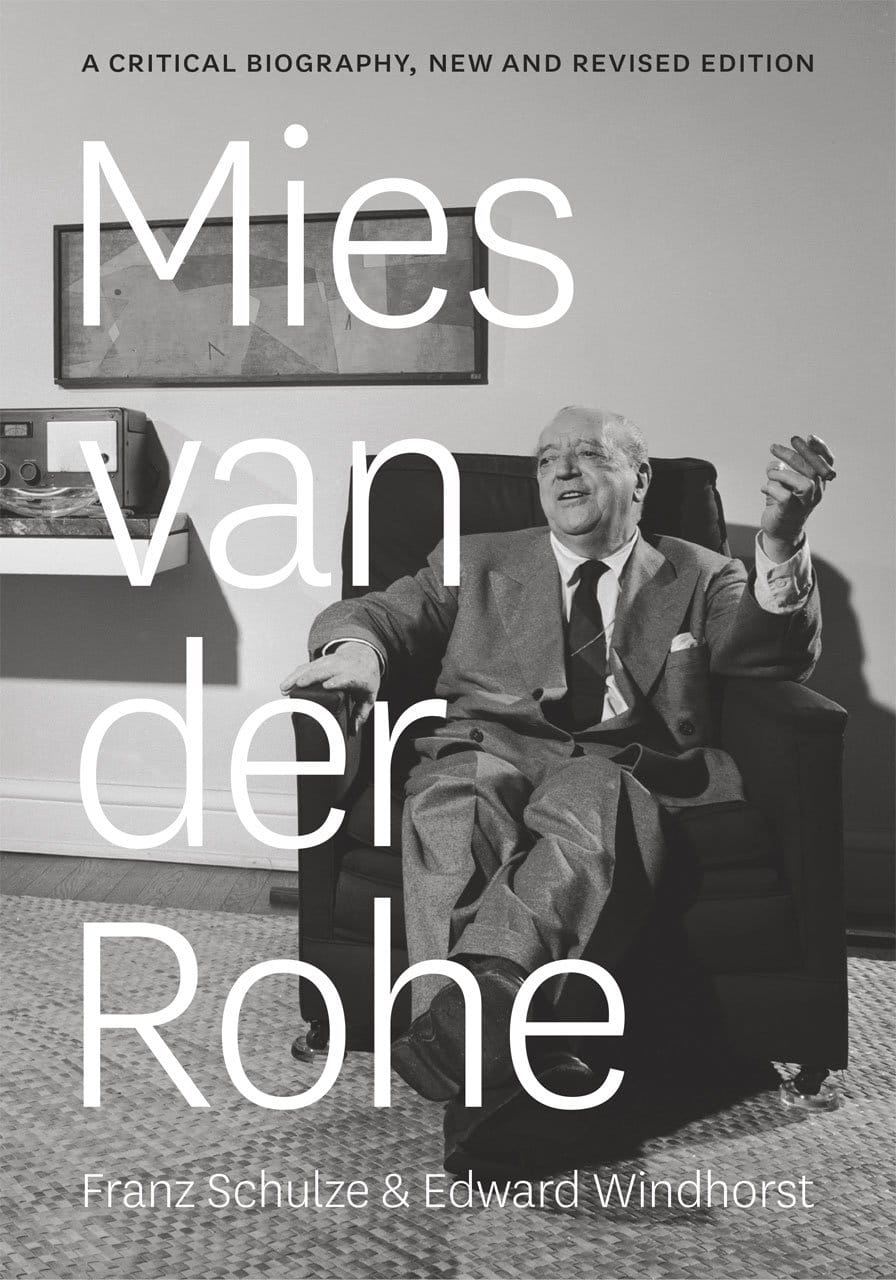
Franz Schulze and Edward Windhorst, Mies van der Rohe: A Critical Biography (University of Chicago Press, revised ed.)
The definitive English-language biography of Mies. The Barcelona Chair’s design context, including the German Pavilion commission, the royal reception ceremony, and Lilly Reich’s historically underacknowledged role in the interior design decisions, is covered with archival depth not available in shorter monographs.
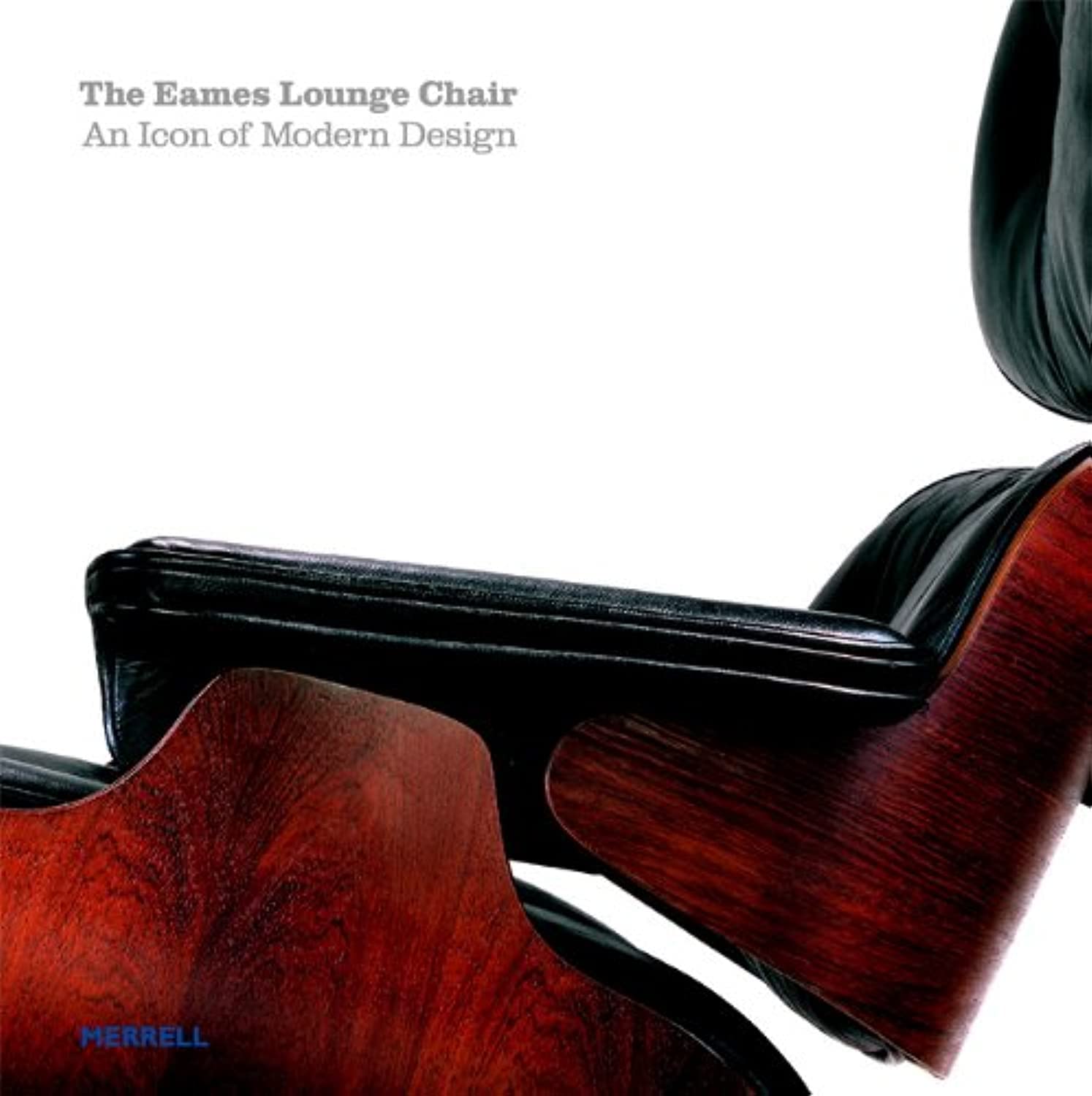
Martin Eidelberg et al., The Eames Lounge Chair: An Icon of Modern Design (Merrell, 2006)
Written specifically about the 670/671 as a design object. Covers development history, construction, Ray Eames’s role in the chair’s genesis, and the chair’s place in MoMA’s permanent collection. The right book if you want to understand one chair completely rather than the broader Eames practice.
Frequently Asked Questions
What is the difference between the Barcelona Chair and the Eames Lounge Chair?
The Barcelona Chair (1929, Mies van der Rohe and Lilly Reich) is a formal, architectural object originally designed for a diplomatic reception. Its X-frame steel structure and floating leather cushions prioritize visual legibility at a distance over ergonomic comfort. The Eames Lounge Chair (1956, Charles and Ray Eames) was designed as a private reading and napping chair: three molded plywood shells, aniline leather cushions, and a reclined aluminum base. One was designed for a room; the other was designed for a body.
Is the Eames Lounge Chair more comfortable than the Barcelona Chair?
For most users, the Eames Lounge Chair is significantly more comfortable for extended sitting. The Barcelona Chair is frequently called a “half-hour chair” because its concave back stresses the lumbar spine. The Eames chair’s reclined angle and cushioned shells distribute weight better for reading and resting, though taller users find the headrest positioning misaligned, and the low seat angle can make it difficult to exit.
Are copies of the Barcelona Chair and the Eames Lounge Chair legal?
Less than most listings suggest. The design patents on both chairs expired long ago, but trademark and trade dress do not expire while they are used. Knoll owns the Barcelona name and a registered trade dress in the chair, and Herman Miller’s trade dress in the Eames Lounge Chair was upheld and found willfully infringed in Blumenthal Distributing v. Herman Miller (9th Cir. 2020). Neither name may be used by anyone else, and the licensed chairs carry the makers’ marks.
How much does the original Barcelona Chair cost compared to the Eames Lounge Chair?
As of 2025, the licensed Barcelona Chair from Knoll starts at approximately $6,500 and runs to $9,200 or more depending on leather and configuration options. The Eames Lounge Chair and Ottoman from Herman Miller starts at approximately $5,495 for the Luce fabric version and runs higher for leather configurations. Both chairs sit in the same price bracket for licensed production. Licensed secondhand examples of both often sell for less than half of new.
Who designed the Barcelona Chair and who designed the Eames Lounge Chair?
The Barcelona Chair was designed in 1929 by Ludwig Mies van der Rohe (1886–1969) and Lilly Reich (1885–1947) for the German Pavilion at the 1929 International Exposition in Barcelona. Lilly Reich’s co-designer role is historically underacknowledged; she was responsible for significant material and interior decisions for the Pavilion. The Eames Lounge Chair was designed in 1956 by Charles Eames (1907–1978) and Ray Eames (1912–1988) as a gift for Hollywood director Billy Wilder.
Is the Eames Lounge Chair good for reading and long sitting?
Yes, for most users. It was designed specifically for reading and napping, which is the context in which Charles Eames described it on its CBS television debut in January 1956. The 15-degree recline, cushioned three-shell construction, and ottoman support make it one of the most practical lounge chairs for extended use. The exceptions: users over approximately 6’2” find the headrest mispositioned, and the low seat angle requires some effort to exit from.
Before buying either chair secondhand, see our guide to how to identify an authentic Barcelona Chair.

About Joe Post
Joe Post holds an MFA in Art from California Institute of the Arts (CalArts) and has done additional graduate work at the School of the Art Institute of Chicago. He founded Art Design Ideas to write about design as cultural argument — the decisions, contradictions, and assumptions built into the objects we live with.